Saturday, July 3, 2021

Something Wicked This Way Comes (Class: Witch)

Alright, buckle the fuck up, this is a long one. This isn't a simplified classis, like the Fighter or the Thief. This is a whole-ass Witch.

A real one, in case you were wondering.

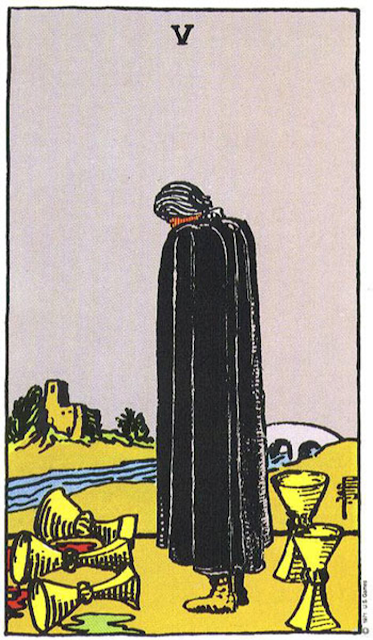
Five of Cups.

Class: Witch (True)

Witches are dark creatures born to followers of the Old Ways who have consorted with spirits, monsters, or beasts. More monster than man, they are an object of both fear and awe. Witches across the old world are regularly abandoned or exiled, so naturally many of them find their way to the Mountain.

There are at least four kinds of witch—categorized by the form which their familiar takes—but all share certain traits and abilities. Most important among these is the ability to perceive, communicate with, and command demons through the use of Maleficent Dice, a process that functions exactly identical to that for casting spells with Magic Dice. If you're playing in a system with proficiency, you have it in staves, knives, scythes, and sickles. If you're a gun witch, you're also proficient with all types of firearm.

Skills: 1. Herbalism 2. Divining 3. Theatrics

Starting Equipment: Peasant clothing, a satchel, a skin of water, a skin of wine, a flint fire-striker, 10 candles, 3 rations of jerky, your choice of a golden sickle or jeweled kris (each a light weapon), one witching tool from the list at the end. 

If you're a gun witch, you also start with 10 witch-bullets and a powderhorn containing 10 doses of witch-powder. They're actually normal bullets and powder, but you're a witch. 1 slot each.

A Flawed, Familiar, Black Magic, 1 MD
B Trophy Casting, +1 MD
C Improved Familiar, +1 MD
D Witch's Curse, +1 MD

A: Flawed 
While directly exposed to the object of your supernatural weakness, you experience extreme pain and revulsion and suffer -2 to all rolls or 1 damage per round as your form visibly rots, burns, or melts away (whichever effects your GM feels are appropriate). You can take measures to protect yourself; for example a weakness to sunlight can be minimized with voluminous clothing and a parasol.

Good weaknesses include but are not limited to: 

  1. Sunlight and depictions of the sun
  2. Precious metals
  3. Ferrous metals
  4. Melodies
  5. Your own reflection
  6. Expressions of strong emotion
  7. Dogs, horses, and whales
  8. Running water
  9. Oil
  10. Prepared food and cut stone

A: Familiar
As a witch, you have the ability to separate and externalize a piece of yourself in the form of a familiar. This takes 10 minutes of concentration and 1d6 HP each time you do it. If destroyed or separated from you, your familiars melt into a mess of blood and keratin over the next 4 days.

What form your familiar takes determines what sort of witch you are, or perhaps the other way around. You have four options:

  1. Gun Witch
    As a gun witch, your familiars are witch-guns, up to [templates] * 2 firearms. They can be created as any firearm weapon, but require ammunition and powder as normal; deal 1d8 damage regardless of form; and will not fire when wielded by anyone other than you. You are fluent in a dialect of Artifice spoken only by firearms.

    At template C when you gain Improved Familiar, your witch-guns deal 2d8 damage and gain the ability to move and manipulate themselves while remaining within your arms' reach. Gun witches who have attained this power are surrounded in combat by a whirling maelstrom of guns and ammo, plucking them from the air in a dance of death before releasing them, empty, to be reloaded by the cross-currents; while stylish, this is a horrifically inefficient way of reloading a firearm and takes twice as long as normal.

  2. Bug Witch
    As a bug witch, your familiars are witch-hives, up to [templates] * 2 swarms of vermin that move at your command. They can be whatever type or types of bug you want, and you can fit them all inside yourself and/or your clothes if you want, which is just horrid. You are fluent in Skittering, a language common to all arthropods.

    BUGWITCH SWARM STATS (EACH)
    HD
     1 HP 4 Size 5' square Immune non-area-of-effect damage
    Special Deals 1d6 damage per round to everything other than you within its area that is vulnerable to being eaten by bugs (most things), without an attack roll or save or any of that nonsense. This doesn't stack because, uh, there's only enough room for so many bugs to eat something at once.

    At template C when you gain Improved Familiar, your witch-hives are imbued with preternatural strength, allowing them to carry you (or anything else, though they'll still be eating it while they do so) up any surface that a bug could climb; or buoy you slowly aloft on thousands of diaphanous wings at a rate of 10' per round. They can only do this for a few minutes at most—you can't fly overland on bugwings. Unwilling bugluggage may make a STR save to avoid being bugnapped.

  3. Friend Witch
    As a friend witch, your familiar is a witch-tulpa, also known as a friend. Unlike most familiars, this isn't so much a piece of your soul externalized into a physical form as it is merely separated from the rest of your selfhood and sequestered within. While carrying a friend, you gain their visible traits, restriction, and first boon.

    Having friends is a bit complicated, so there's a section downbelow (under the spells and mishaps and dooms and such) that details how that works.

    At template C when you gain Improved Familiar, you achieve complete (dis)unity with your friends, gaining the second boon of any friend that you carry as well.

  4. Cancer Witch
    As a cancer witch, your familiar is a witch-tumor which (ha, a-ha) quarantines within itself and protects you from the effects of any diseases or other maladies that you contract. You may choose to pass or fail saves against such maladies when you encounter them, and are able to secrete diseased blood from your palms which causes any who contact it to save against transmission of any maladies thus contained.

    If you are ever subject to an effect that cures diseases, your witch-tumor dies along with any maladies contained within it and you must create a new one.

    At template C when you gain Improved Familiar, you gain the ability to spray a torrent of diseased blood from your palms like a really gross firehose. This costs you 1 HP each time you do it, and reaches, I don't know, at least 30' straight up or up to 60' in a horizontal arc.
A: Black Magic
You are familiar with two spells from the list way downbelow. One is the demon known as Evil Eye, and the other is determined by rolling 1d20. Each time you gain another template of Witch, roll once to attract a new spell—if you roll a result you already possess, choose the next spell above or below it that you don't already have.

B: Trophy Casting
You have developed methods of enhancing your power and protecting yourself from the hazards of spellcasting, using your blood and trophies with significance to the Old Ways as fuel. You can voluntarily change any number of MD to show a 6 after rolling them, allowing you to avoid chaos or doom, at the cost of consuming a trophy and taking damage equal to the original die result for each MD to be changed.

Examples of trophies include: snake skeletons, wolf hearts, shark jawbones, and jars of ash from the corpses of sentient creatures that burned to death. Only one trophy may be produced from each corpse, and a corpse must be at least of small size to produce a trophy. A trophy takes up 1/3 of an inventory slot.

D: Witch's Curse
When a powerful witch such as yourself pronounces a curse, the universe takes notice. In order for this to work properly you must have been legitimately (in your eyes, and those of the DM) wronged by your victim-to-be, otherwise you can just curse them with Evil Eye like a lesser witch.

In addition, tales of your exploits and magical potency have by now reached the Civilized Lands and caused folk there to Take Notice. Expect an apprentice warlock and 1d6 furious witch-hunters to arrive on the next ship—if they aren't here already.

Witch Magic

As a spellcaster, you are able to perceive and communicate with the spirits known commonly as spells. As a witch, those available to you to command (by means of your MD) are technically termed demons, also known as elementals, though this system of classification is somewhat tautological. Alas.

Other spells may exist, and you may be able to bribe, coerce, or otherwise convince them to join you. By the same token, experienced witches and such met in the wild may travel with spells outside this list.
  1. Evil Eye
    A hunched form with a single large eye and pointed ears; or are they horns? Their material appearance varies significantly between instances—plant matter, stone, raw flesh...
    The first demon any witch becomes familiar (ha, aha) with. He may be ordered to harass a target, tweaking their ears and tying their shoelaces together and generally being a nuisance until given a new order. If it matters, he can exert up to [sum] pounds of force at a time during this duration. Owing to his simple-minded and generally servile nature, he is easy to bribe or goad (using MD) into performing tasks outside his usual repertoire—nearly all of which he is wildly incompetent at.

  2. Hand
    She is a mass of red ribbons, stretched across every available space. She 'speaks' seldom, and softly when she does.
    While you concentrate, Hand can lift and move objects within a stone's throw gently at a rate of [dice] * 30' per round, or hurl them up to [dice] * 60' dealing [sum] damage to them and anything they impact with a DEX roll for half. If used to crush, tear, etc, she deals [sum] damage per round. She cannot affect targets that pass a CHA save (or have one passed by their holder/wielder/wearer/etc), and is limited to targets of approximate mass relative to the number of MD invested in her:
    • 1 MD - a handheld object or small animal
    • 2 MD - a person plus gear
    • 3 MD - a horse or monitor plus rider and saddlebags
    • 4 MD - a fully laden wagon
    • 5 MD - a small house plus inhabitants and furniture

  3. Mend
    He is grey-skinned and sullen, wearing something that looks like tradesman's leathers. Can be roused to enthusiasm by detailed engineering discussions.
    Mend
     patches holes, welds breaks, and otherwise repairs the touched object instantly, healing up to [sum] + [dice] HP to it if it has HP or fixing any amount of damage short of complete destruction if it does not. If an object has been completely destroyed, Mend may still be able to reconstitute it depending on its complexity and the number of MD invested in him:
    • 1 MD - simple shapes, blocks of material
    • 2 MD - boats, wagons, bridges, most weapons and armor
    • 3 MD - artworks, siege engines, sailing vessels, complex architecture
    • 4 MD - clockworks, repeating firearms, steam engines
    • 5 MD - most corpses (though Mend cannot restore life), most electrical devices

  4. Shatter
    She is boldly colored and somewhat crudely formed, as if pieced together from scrap clay by an inexpert sculptor. Over-fond of complex plans and mechanisms. Thinks she's smarter than she is.
    In order to command Shatter, her name must be shouted; not merely spoken. She does exactly what her name suggests to any target within shouting distance, and is capable of wreaking an amount of destruction relative to the MD invested in her:
    • 1 MD - A few blows with a hammer (A handheld object, an artwork)
    • 2 MD - Two folks with tools (A door, a chest, a sarcophagus)
    • 3 MD - A half-dozen tradesfolk with block and tackle (A tunnel, a wooden building, an architectural feature)
    • 4 MD - A dozen tradesfolk with heavy equipment (A stone building or fortification, a large cavern)

  5. Enlarge
    She is blue-skinned, elephant-headed, enormous. Refuses to believe problems can be solved by any means other than physical force.
    Enlarge
     doubles the size of the touched target [dice] times for up to [sum] minutes. If the target is a creature, it gets +2 STR and -2 DEX for each time it is doubled, and anything worn or carried by it likewise increases in size. For each time size is doubled, weight quadruples.

  6. Reduce
    He is red-skinned, bull-headed, enormous. Refuses to believe problems can be solved by any means other than physical force.
    Reduce halves the size of the touched target [dice] times for up to [sum] minutes. If the target is a creature, it gets -2 STR and +2 DEX for each time it is halved, and anything worn or carried by it likewise decreases in size. For each time size is halved, weight is quartered.

  7. Heal
    Wears a linen robe, clinical, detached, omits names and pronouns when speaking. Seen it all before, twice.
    Heals the touched target for [sum] + [dice] HP. Alternatively, can be directed to solve specific problems depending on the MD invested in her:
    • 1 MD - No alternatives.
    • 2 MD - Mend broken bones or other long-term wounds.
    • 3 MD - Cure a malady such as disease or poison.
    • 4 MD - Reattach recently severed limbs.
    • 5 MD - Regrow missing limbs or organs.

  8. Inflict
    He is a crying youth with six many-jointed arms. Two cover his face, two hug his body, and two wield straight razors in furious slashing arcs.
    Inflict cuts a given target within a stone's throw for [sum] + [dice] damage. He refuses to be directed against inanimate objects specifically, or ones which don't appear to bleed or feel pain.

  9. Illusion
    He is long-haired and vain and aristocratic, pouts if formed into something ugly and preens if formed into something beautiful. His aesthetic sensibilities are focused on bright, clashing colors.
    Illusion shapes himself into an object or creature up to [dice] * 5' in diameter, which appears completely real and moves however you desire but produces no sound, smell, touch, heat, etc. Shaping Illusion into a detailed copy of an existing object or creature requires either close familiarity or a reference to work from. Creatures inspecting Illusion closely may roll INT to determine his true nature.

  10. Darkness
    He is a three-meter-long grub, black and shiny and dimly transparent. Clumsy, sleeps more than he's awake.
    Darkness
     attaches himself to the touched target and radiates a cloud of absolute magical darkness in a [dice] * 10' radius. Non-magical sight within or through the radius is completely impossible. He can maintain this effect for up to [sum] hours when attached to an inanimate, unattended, or willing target, or [sum] rounds if attached to an unwilling one that succeeds a CHA save.

  11. Invisibility
    She is faceless, wearing a dark business suit. She chatters with the neurotic, anxious edge of an inferiority complex, especially when performing a task.
    Invisibility submerges the target partway into the ethereal plane for up to [dice] * [sum] minutes, rendering them completely invisible to normal sight and able to see other invisible creatures and objects. If cast with 4 MD, she hides the target from supernatural vision of non-invisible creatures as well.

  12. Scrying
    It has a boxy, geometrically shaped head and a large, hooded eye. Below the neck, it disappears into a mess of black-feathered wings and a single, large crow's foot.
    Scrying
     will allow you to perceive through its eye at will, and can be directed to seek out any target that you know the name of and could identify in a lineup of similar targets regardless of line-of-sight or range, which it will watch for up to [dice] [sum] hours. If it matters, it flies about as fast as a commercial airliner. For each MD invested in it beyond the first, you may have it perform one additional task from this list:
    • Relay sound to you.
    • Relay touch, taste, and smell to you.
    • Allow you to speak through it.
    • Alert you under specific conditions even if you're not paying attention (or sleeping).

  13. Open
    He wears a jumpsuit or coverall, and has four many-jointed arms tipped with jagged steel spines. He is a creep, a voyeur, a kleptomaniac, and argues vociferously for you to fulfill his desires.
    Opens
     a target within a stone's throw. Doors are flung wide, shackles bent open, belts come undone. The occupants of armor, clothing, mecha, etc. are expelled. If the target is secured, attended, or sapient, Open is [dice] level with +[best] STR, and skilled at opening things. 

  14. Hold
    She is a sinister figure in white, blindfolded, bound in chains and one of those funny jackets that won't let you check your wristwatch. She speaks in a piercing, imperious voice.
    Closes and locks (if applicable; doors slam shut, drawbridges slam up, half-drawn swords slam back in their scabbards) a target within a stone's throw, then Holds it in place for up to [sum] rounds. If the target is secured, attended, or sapient, Hold is [dice] level with +[best] STR, and skilled at wrestling.

  15. Terror
    He is an emaciated figure, contorted into a fetal position with wild eyes and every muscle tensed. He is terrified of everything, for absolutely blisteringly incoherent and conspiratorial reasons. If asked to elaborate on a given phobia, he has a 1-in-6 chance of being (in some small part) correct in his fears.
    Emanates a burst of psychic Terror, causing up to [sum] targets of [dice] HD or less to roll CHA or flee your presence for [sum] rounds. If unable to flee, targets that fail their saves cower unresponsively for the duration. Targets that succeed their saves or remain in your presence beyond his duration are shaken, and suffer a -2 penalty to everything until they are able to escape you and take a minute to calm down.

  16. Sleep
    He is a twitching, aberrant wreck, paranoid shivers and sharp edges cast in polished steel and white glass. He abhors violence and will wake his targets by shrieking if you plot to execute them.
    Causes up to [sum] targets of [dice] HD or less to roll CHA or fall into a deep, coma-like sleep for [sum] hours, from which they can only be awoken by vigorous slapping/shaking (which takes an action from someone nearby) or damage, and during which they do not require any food or water. Surprised targets automatically fail their saves, and if cast on a single target with more than one MD his effects are permanent until awakened.

  17. Fog
    He is a pile of cyan-stained rags and linens that only vaguely resembles a humanoid form. A diffuse, pale glow emanates from where his face would be.
    A huge quantity of black Fog pours forth from your mouth and nose, spreading to cover a [dice] * 30' radius for up to [sum] hours, or [dice] minutes in bright sunlight or strong wind. The density and effects of the fog vary with the number of MD invested in him:
    • 1 MD - The fog is sufficient to obscure details (faces, etc) and apply disadvantage to ranged attacks made through it.
    • 2 MD - The fog is sufficient to obscure objects more than 5' away in their entirety.
    • 3 MD - The fog is thick enough to conceal an outstretched hand, and completely opaque to supernatural vision.
    • 4 MD - The fog deals [best] damage to creatures other than you with every breath, and they must roll STR each round or be struck permanently blind if it contacts their eyes directly. When commanded with this number of MD, Fog instead answers to the name Cloudkill.

  18. Animate Dead
    She is an old woman, black-shrouded and mourning. Her voice carries the weight of centuries, and she teases at ancient secrets.
    Animates
     a touched corpse of [dice] * 2 HD or fewer, raising it as undead. If cast with 2 or less MD the undead raised are unintelligent and will serve you unquestioningly. If cast with 3 or more MD the undead raised are intelligent, created free, and may roll CHA to resist being brought back into the world if they desire. The specific type of undead raised depends on the number of MD invested in her, and the ritual preparations undergone as a part of the casting:
    • 1 MD - Skeleton. Requires black gemstones worth at least 25 sp, which are placed in the eye sockets of the corpse. Removing the flesh of a corpse that is not already skeletonized takes at least one hour of solid work.
    • 2 MD - Zombie. Requires embalming and preservative agents worth at least 50 sp and one hour to properly apply them, or a corpse which has already been preserved through similar methods. Alternately, zombies can be created with no preparation or materials from a fresh corpse, but will be paralyzed by rigor mortis within [sum] hours.
    • 3 MD - Ghoul. Requires a piece of dead flesh and gnawed bone both from the corpse of a sapient creature, a pot of grave earth, a fragment of crypt or tombstone, and ten minutes to force all of the above down the target's throat and into its stomach.
    • 4 MD - Revenant. Requires black gemstones worth at least 1,000 sp, the bottled soul of a sapient creature, and one minute to lure the target's soul back to their body using the above as sacrifices.
    • 5 MD - Haunting. Requires an item of the target's that had great personal value to them when they were alive, and six hours to carry out the necessary rituals to summon and re-bind them to their corpse.
    • 6 MD - Lich. Requires uniquely powerful reagents that are definitely not for sale, and twenty four hours to conduct an elaborate ritual extracting and processing the target's soul. Animate Dead resents answering to this name, and protests its inaccuracy.

  19. Abjure
    He is a small child formed from blue-tinged iron, nervous and fretting with bracelets. He is lonely, friendly, and craves the company of other demons.
    Abjures
     magical effects, elementals, devils, other spells, the animating spirits of undead or constructs, curses, &c back to wherever they came from. He reduces his target's [dice] and [sum] each by his own, completely banishing them if either is reduced to 0; use HP and HD in their place if it's a target that doesn't have those values. If commanded as a readied actionAbjure can affect others spells as they're cast and before they take effect. 

  20. Summon
    She is a devilress clad in black businesswear, her proportions slightly off when viewed from the corner of your eye. Her fingers taper to red-stained razor points, and her ever-so-slightly-too-wide grin hides a forest of needlelike teeth. She is quick to inform about the dangers of commanding her, and has release forms and waivers to be signed if you do.
    Summons
     a devil of [dice] HD and [sum] HP for [sum] rounds. The devil is not in any way compelled to do your bidding unless you know its true name, in which case it is unable to harm you and you may dismiss it at will. Commanding Summon with more preparation (and signing more of her contracts and forms) allows a longer duration and more control over the devil to be summoned:
    • With one round of preparation (a hasty signature, a quick sigil on the ground) the summoning persists for [sum] minutes and you may make one opposed CHA roll to banish the devil per round (for example, if it's trying to kill you).
    • With one hour of preparation (a lengthy perusal of contracts, a well-formed summoning circle) the summoning persists for [sum] hours and the devil is unable to leave the summoning circle until you allow it (traditionally, after it's agreed not to kill you).
Witching Mishaps

  1. You contract Snoos, a sort of exposure-induced allergy to magical irradiation which causes any further magical effects to stun you into a watery-eyed sneezing fit for 1 round each. In addition, your skin gives off a faint blue glow until next dawn.
  2. Your veins turn jet black beneath your skin, stiff and painful. You gain no benefit (aside from your blood returning to normal) the next time you rest, and take 1 damage per minute exposed to sunlight until you do.
  3. Shards of black glass explode into being around you, pelting everything within 20' (including you) for [sum] damage, DEX half. Until the next dawn, any wounds you directly inflict on others are mirrored onto your own flesh.
  4. A torrent of winged insects issues from your mouth for [dice] rounds, preventing you from doing anything other than stagger around. Anyone within 20' must roll CHA or be likewise incapacitated as they flail and swat at the choking swarm.
  5. Your mouth seals itself into a smooth expanse, preventing you from speaking or casting spells for [sum] minutes. Stubby mushrooms sprout from all inanimate surfaces in a [dice] * 5' radius ring.
  6. Up to [sum] nearby corpses rise from the grave and attack you with single-minded intensity, moaning and whispering your name. Plants within a [dice] * 5' radius wither away and will never grow there again.

Witching Dooms

Witch (ha, aha) doom do you get? I guess it depends.

Doom of Fish

  1. Your eyes grow huge and milky, your flesh grey and slick. You can see in the dark.
  2. Your skin hardens to glimmering scales, webs grow between your extremities and your body. +4 AC; double speed in the water, half speed on land.
  3. Your lungs reshape and extrude themselves onto the surface of your skin as gills, and your limbs wither away into sleek-spined fins. You're a fish now, can't speak any language other than Hadeal, and drown in open air.
The Doom of Fish can be escaped by capturing the teeth of a sea monster and burying them in dry land.

Doom of Blood

  1. Blood crusts slowly around your eyes, nostrils, other orifices. You heal 1 HP per pint of blood you drink.
  2. Your wounds no longer close, and blood beads slowly through your skin. You no longer heal naturally from food or rest.
  3. Your skin sloughs off entirely, and a torrent of blood issues perpetually from any uncovered openings in your body. You can't speak any language other than Serumic, and lose 1 HP per hour.
The Doom of Blood can be escaped by removing all of your blood—which becomes progressively more difficult as you advance in this Doom, since it gives you more blood or you'd bleed out even faster than it already makes you.

Doom of Ashes

  1. Your flesh turns black; your blood thick, syrupy, and magnetic. No wound can kill you, though you still risk death—and dismemberment—by other means.
  2. Your entire body aches, and your eyes are as black as void. Absolute darkness is daylight to you, but even dim light blinds. Any spells you cast that would create light—even incidental—create magical darkness instead.
  3. You fade into a charred and insubstantial shadow, rendering you unable to interact with physical objects or speak any language other than Ember. Bright illumination destroys any part of you that it touches.
The Doom of Ashes can be escaped by giving up an archdemon as a burnt offering, in a ritual presided over by a priest of appropriate power.

Doom of Bones

  1. Bones rattle angrily about and against each other in your presence, causing you and anything adjacent to you that possesses bones to suffer disadvantage on any tasks requiring dexterity or quiet.
  2. Corpses which possess skeletons animate in your presence and attack you, and even loose bones gain some level of locomotion and will do their best to harm you.
  3. Your own bones rebel against you, escaping your flesh as an animate skeleton and rendering you unable to speak or understand Clatter if you could before, or—perhaps more importantly—move in anything approaching a useful fashion. On the upside, I guess you don't personally suffer from your first Doom anymore.
The Doom of Bones can be escaped by replacing your (traitorous, scheming) skeleton with bones cut from a suitably impressive snake. Some crushing and sintering may be necessary.

Witch-Tulpas (also known as Friends)

Summoning a friend works the same way as it does with other familiars (10 minutes, 1d6 HP, et al) but once summoned they are carried within your soul, rather than physically. If you break a breakable restriction of the friend you are carrying, you immediately stop carrying that friend and take 1d6 damage due to psychic shock.

Each time you gain a template of friend witch—including the first—roll once on the list below to determine which friend you are able to summon. If you eat the heart of another friend witch, you gain the ability to summon any friend they were carrying at the time of their death.

As with the spell list, this is just a list of those possible to start the game with as a friend witch and more may exist:
  1. Nuul Ux, the Ashen Waste
    Visible:
     Pallid; emaciated; charred skin flakes away to reveal pink scar tissue.
    First Boon: Spoil food and evaporate water with a glance at up to 60' range.
    Second Boon: Weapons wreathed in smoke and cinders, treat all AC as 10 and deal fire damage.
    Restriction: Food and drink turn to ash at a touch, granting no nourishment.

  2. Um-Yanith, the Carrion Feast
    Visible:
    Stinking; plagued with lice and fleas; hair falling out in clumps; skin gleams sickly.
    First Boon: Can eat and gain nourishment from any dead flesh, immune to effects of rotten meat.
    Second Boon: Gain immunity to one spell or magical ability of any creature you eat, as long as Um-Yanith is carried.
    Restriction: Must eat a piece of every corpse you see and have access to.

  3. Um-Sharan, the Chronicle Worm
    Visible:
    Corpulent; veins and organs show faintly through translucent skin.
    First Boon: Able to read (not speak) any language, living or dead.
    Second Boon: Recover one memory from anything you consume.
    Restriction: Must stop to read any text you encounter in its entirety, and never interrupt a story.

  4. Hexochre, the Conqueror King
    Visible: Smoldering embers for eyes; clothing turns to soot-black, cruelly spiked armor.
    First Boon: Clothes harden and transform to black steel plate (17 AC) while Hexochre is carried.
    Second Boon: Body gains mass and scars of a warrior hero, count as having +4 STR.
    Restriction: Must respond to insults with immediate violence.

  5. Phoemordia, the Drowned Queen
    Visible:
    Blue-black eyes and lips; white skin; yellow sclera; perpetually dripping.
    First Boon: Point to a target within 10' of water; ghostly hands (+5 STR) drag them in.
    Second Boon: If you die underwater, immediately rise as a ghoul but must carry Phoemordia forever.
    Restriction: Halve maximum HP. Followers have a 5% chance of desertion per day.

  6. Zoshardan, the Earthen Sword
    Visible:
     Calloused, grey-brown skin; smell old, like cave dust and wet stone.
    First Boon: Create spiked formations from existing stone with a gesture; 3d6 damage, DEX half.
    Second Boon: Merge limbs with stone or earth to become immovable; works on walls and ceilings too.
    Restriction: Take 1 damage per round exposed to sunlight or running water.

  7. Vo Fanur, the Elder Dragon
    Visible:
     Ancient, weathered scales; burning eyes; wispy beard, like cobwebs.
    First Boon: Accurately appraise values (of treasure) and ambition (of creatures) with a glance.
    Second Boon: Breathe 60' cone of poison fire; 6d6 damage, DEX half, you take 2d6 yourself.
    Restriction: Roll CHA per creature encountered or be convinced they plot against you.

  8. Temeri, the Elemental Evil
    Visible:
    Colors shift across body—deep red, bright orange, yellow-white, green-blue-black.
    First Boon: Take 5 less damage from fish, blood, ash (including natural fire), or bone attacks.
    Second Boon: Speak Hadeal, Serumic, Ember, and Clatter with aristocratic airs.
    Restriction: Must be touching all four elements (fish, blood, ashes, bones) at all times.

  9. Hulk, the Hulk
    Visible:
     Muscles swollen and corded like steel cables; skin a quilt of stark white scars.
    First Boon: Focused rage grants immunity to mental attacks and fear. +1 STR.
    Second Boon: Violent fury allows additional melee attack per round. +1 STR.
    Restriction: Mustn't use ranged weapons or speak except battlecries and taunts.

  10. Gra Yan Eb, the Hand of Doom
    Visible:
    Dominant hand drips blood continually.
    First Boon: Held weapon drips blood and deals +1 damage per round of combat (+2 second round, etc.)
    Second Boon: Mark target as an action; one target at a time. Held weapon deals double damage to them.
    Restriction: Mustn't hold weapons—even two-handed weapons—or shields in any off-hand.

  11. Dracula, the Impaler
    Visible:
     Bone-white skin; prominent canine teeth; air of elegance.
    First Boon: Gain bite attack for 1d6 damage; heal self for damage dealt or 1d6 per pint of blood drank.
    Second Boon: Unless beheaded or burned, can't die and heal 1 HP / hour. Still unconscious below 0 HP.
    Restriction: Take damage per second in sunlight or running water. Mustn't enter homes without invitation.

  12. Cthfanut, the Dark Heart of the Wood
    Visible:
     Limbs like tree trunks, gnarled like knotted oak; hair like lichen.
    First Boon: Thick bark grants +4 AC. Impossible to understand your identity, even for your party.
    Second Boon: Take 5 less damage from any unnatural source, i.e. manmade fire, sword, knapped stone.
    Restriction: Can't use unnatural tools (sharp rocks or draped furs ok, whittled clubs or sewn hides not).

  13. Mordun, the Moonchild
    Visible:
     Shed dim moonlight (which counts as real moonlight) from pale, glowing skin.
    First Boon: Take no more than 10 damage from any single event.
    Second Boon: Whenever the DM rolls the maximum result on any die, they must treat it as a roll of 1.
    Restriction: Whenever you roll the maximum result on any die, treat it as a roll of 1.

  14. Firmatur, the Mountain Hearth
    Visible:
     Radiate warmth; eyes flicker like dim, distant campfires.
    First Boon: Food you prepare is preternaturally delicious and heals double normal value.
    Second Boon: Emotions are calmed within 20' of you, aggressive action requires CHA save.
    Restriction: Mustn't make attack rolls.

  15. Karereca, the Tombed Horror
    Visible:
     Bones visible through flesh and organs; eyes absorb light like holes in reality.
    First Boon: Anything with bones that you slay rises immediately as a skeleton, as Raise Dead.
    Second Boon: Can control up to [templates] * 4 undead (four times normal limit).
    Restriction: Undead you don't control attack you on sight. Automatically fail saves vs. disintegration.

  16. Grutulat, the Star Serpent
    Visible:
     Points of light shine out from body like holes in a paper lantern.
    First Boon: Conjure and control lifelike illusion of constellation as long as you concentrate.
    Second Boon: Put target unconscious mind into snake-filled coma as long as Grutulat is carried.
    Restriction: Must not enter areas of bright illumination.

  17. Aklonhu, the Silent Forest
    Visible:
     Predatory mien; long and red in tooth and claw.
    First Boon: Continually project zone of absolute silence in 5' radius.
    Second Boon: Your unarmed attacks cause targets to forget all language for 1 day per point of damage.
    Restrictions: Mustn't communicate beyond simple body language. Shrugs fine, pantomime not.

  18. Tia Tuneb, the Wayfinder
    Visible:
     Bright light shines between eyes; 30' cone of bright illumination and 30' of dim beyond that.
    First Boon: Always aware of distance and relative direction to peak of the Mountain. It is very high.
    Second Boon: Cover unlimited distance in one day of walking—not swimming, climbing, etc.
    Restrictions: Mustn't ride a mount or vehicle; must travel alone.

  19. Lolu Lar, the Leaping Dark
    Visible:
     Eerily still when not in motion, then unnaturally fast and twitching. At least four too many eyes.
    First Boon: Jump up to 30' without a roll, climb anything a spider could easily as walking.
    Second Boon: Sense movement within 60', no blindness penalties within that range.
    Restrictions: Mustn't wield firearms, nor cause injury to any of your traveling companions.

  20. Etun, the Stillborn Godsun
    Visible:
     Soft, deformed figure; oversized head; casts bright illumination with unlimited range.
    First Boon: Useful vision; useless vision; misleading vision; or no vision (1d4) each time you rest.
    Second Boon: Dwarves and angels will refuse to harm you, take no damage from consecrated fire.
    Restriction: Mustn't open eyes.

Witching Tools

  1. Peasant Clothing. A useful disguise. No slots when worn.
  2. A nice Satchel. Sturdy and utilitarian. This is your inventory.
  3. Skins of Water and Wine. The wine is strong, blackberry, and you likely made it yourself. 1 slot each.
  4. Fire-striker. A bit of flint, useful for making sparks if you've got any iron around. Negligible bulk.
  5. 10 Candles. Handmade, tallow. Cast 5' of bright light and 5' more of dim, burn for an hour each. 1 slot altogether.
  6. 3 rations of Jerky. Goat, crow, or villagefolk. 1 slot altogether.
  7. Golden Sickle. For harvesting herbs, technically, but don't let that stop you. 1/3 slot.
  8. Jeweled Kris. A classic weapon for spooky folk. Intimidating. 1/3 slot.
  9. Quill and 10 sheets of Vellum. Useful for taking notes and such. 1/3 slot altogether.
  10. Mortar and Pestle. Sort of a "travel cauldron", a real one's too big to haul around. 1/3 slot.
  11. Very Large Hat. Big enough to hide a small child under. No slots when worn.
  12. High Pointed Boots and Striped Socks. Very fashionable. No slots when worn.
  13. Trick Ring. Secret compartment. Good for poisonings and such. Negligible bulk.
  14. Collection of Odd Botanicals. Smell bizarre. 5-in-6 chance of containing exactly what you need, diminishing with use. 1/3 slot.
  15. Bottle of Scorpion Whiskey. Got a real candied scorpion in it; also quite good whiskey. 1 slot.
  16. "Black" Cat. Actually calico, under the mascara. Fairly well-trained, as far as cats go; enough to follow you around, anyway. 1 slot, but won't let you carry it around much.
  17. Poppet. A doll made with your hair. Might confuse very stupid demons or angels that accost you. 1/3 slot.
  18. Cursed Mirror. One side reflects things much smaller than they are, the other much larger. Not actually cursed. 1/3 slot.
  19. Cursed Taxidermy. So poorly done as to be unidentifiable. Could be a large cat, mid-sized raccoon, or very small child. Only "cursed" in the twitter meme sense. 2 slots.
  20. Something weird. Roll 1d6:
    1. A magic teaspoon. Dissolves in liquid, extremely poisonous, not actually magical. Negligible bulk.
    2. A cursed grimoire. Screams when opened, eats uncareful mice and beetles. 1/3 slot.
    3. An umbrella with a parrot's-head pommel. Provides off-color commentary and cusses. 1 slot.
    4. Cane with a wolf's-head pommel. Bites anyone other than you who grasps it. 1 slot.
    5. A solid gold femur. Looks human. 2 slots (heavy).
    6. A magic candle. Does something specific. Roll 1d6 again:
      1. Casts darkness instead of light.
      2. Hovers above your head when lit.
      3. Never runs out.
      4. Impossible to extinguish, burns underwater or in vacuum.
      5. Burns hot enough to cut steel.
      6. Summons a powerful devil. Does not allow the same sort of control Summon does.

Saturday, June 12, 2021

You Shall Not Steal, nor Deal Falsely, nor Lie to One Another (Class: Thief)

A Thief, in the style of my Fighter, I suppose.


Seven of Swords.

Not recognizing anyone’s right to judge me, I don’t ask for either pardon or indulgence. I don’t go begging to those I hate and hold in contempt. You are the stronger. Dispose of me as you wish; send me to a penal colony or the scaffold. I don’t care! But before going our separate ways, let me tell you one last thing:

The right to live isn’t begged for, it’s taken. 
― Marius Jacob, Why I Was a Burglar, 1905 

Class: Ultimate Thief

Every template of Thief you have gives you +1 to sneaking, stealing, and saves. Your second and fourth templates also each give you +1 to-hit. If you're playing in a system with proficiency, you have it in light armor and any type of weapon that can be both wielded in one hand and concealed under a light jacket.

Skills: Stealth and see template A.

Starting Equipment: A knife, a light weapon of your choice and ammunition for it if applicable, a thieves tool, dark clothing, a bullseye lantern and oil, soft boots, and a cloak.

A Scraps, Skilled, Stolen Fortunes
B Connected, Hidden Pockets, +1 Skill, +1 FD
C Opportunist, +1 Skill, +1 FD
D Shadow, +1 Skill, +1 FD

A: Scraps
A life spent eating scraps and fleeing from the cops has left you frail and sickly, giving you -1 HP per HD.

A: Skilled
A thief lives or dies by their skills, and by surviving this long you've already picked up a much broader repertoire than most adventurers—as well as some special tricks. Twice upon gaining this template as well as once for each thief template thereafter, gain a skill from the list downbelow. In addition, you gain the special ability from the list for each skill on it that you have.

A: Stolen Fortunes
You have a pool of Fortune Dice, or FD, which are d4s equal to the number of thief templates you have. You can roll any number of these when you roll a d20, and add them to the result. FD that come up a result less than or equal to the number of FD you rolled are expended until you get a good long rest, otherwise they return to your pool.

B: Connected
Whatever organization, underworld, community, or creed you belong to is connected to people and places everywhere, and there are signs by which you may recognize and be recognized as a part of the same. When you roll a natural 7 on a reaction roll, reroll it and the encounter is in some way connected to your background.

B: Hidden Pockets
You have [templates] extra inventory slots. Items you store in them can't be found by anyone unless you want them to.

C: Opportunist
When fighting an opponent who can't pay full attention to you—because they've got sand or sun in their eyes, they're being flanked, you yelled "hey what's that over there" and they're an idiot, &c—your attacks deal double damage.

D: Shadow
You can vanish in shadows, do loud things (running, fighting, breaking stuff) very quietly, and do quiet things (walking, climbing, pulling a knife, rummaging around in a backpack) in absolute silence. 


image stolen (ha, aha) from artstation

1d20 Thief Skills

  1. Locksmithing
    When you successfully pick a lock, it's instantaneous. When you fail, it only takes a round.

  2. Jury-rigging
    Improvised or makeshift tools and devices function as well as professionally made ones, in your hands.

  3. Climbing
    You can climb sheer surfaces as if they were merely difficult, even without gear.

  4. Acrobatics
    You can dodge over, around, and effectively through people and person-scale obstacles as if they weren't even there, as long as there's room to do so.

  5. Burglary
    Given ten minutes per hundred square feet, you can pile everything vaguely saleable - including hidden objects, parts of other objects, et cetera - in the middle of a room.

  6. Appraisal
    You can determine the value of objects to within one order of magnitude at a glance, and identify them precisely with between one minute and one hour of study depending on scale.

  7. Forgery
    You can forge believable documents, signatures, et cetera without an original to examine, provided you've seen one before or have a halfway decent description to work from.

  8. Disguise
    When disguised as someone, you count as them for any magical or metaphysical purposes. If it matters, you can also mimic their iris patterns, fingerprints, blood type, &c.

  9. Forensics
    When examining the scene of an event, you can physically see and hear an approximation of how the event played out. This won't necessarily give you any new information, but it will certainly make clues obvious that might otherwise have been missed.

  10. Anatomy
    When presented with an unaware subject that possesses a comprehensible anatomy, you can place them in whatever state you desire with a nerve pinch/karate chop/stiff-knuckled jab to the pressure points.

  11. Fast-talking
    Potential interlocutors must check morale to interrupt or disbelieve you as long as you keep talking. You can speak for a full thirty seconds without running out of breath.

  12. Devices
    You can alter or repair devices effectively even without appropriate tools. When you sabotage a device, you can choose exactly what time or condition under which it will fail and the manner in which it will do so.

  13. Toxicology
    You can determine the nature of a poisoning from symptoms without risk of error, and can formulate a reasonably effective poison or antidote from any well-stocked pantry or acre of wilderness.

  14. Linguistics
    Through roguish instinct, you know how to say all of the following in any language that you've heard spoken even once:
    1. "I don't want any trouble"
    2. "How can I get fucked up around here?"
    3. "I have the money, if you have the stuff"
    4. "This is [a] robbery!"
    5. "That's my wife!"
    6. "COPS!"

  15. Smuggling
    Once per locale, you can have had a connection smuggle something helpful in for you. The DM gets to decide what exactly it is (which you do not know) and where exactly it's placed (which you do).

  16. Intimidation
    Your threats are always treated as credible and requiring morale checks by anything that can understand them. You could bop a dragon on the shin and say "eeeeeehhh nice pile of treasure you got here, be a shame if something happened to it" and they would have to make a morale check. Dragons have very, very high morale scores, but they still have to make the check.

  17. Fencing
    You have a 2-in-6 chance of finding a buyer for stolen goods in any settlement, a 2-in-6 chance of knowing if any given buyer is going to rat you out, and a 2-in-6 chance of disarming your opponent in a flashy prise de fer with the first attack you make in each combat.

  18. Pickpocketing
    When someone tries to wield an item you have a 2-in-6 chance of having already stolen it, if you've been within arm's reach of them within the last hour and should so desire.

  19. Drinking
    You can identify special properties of beverages accurately by taste. When blackout drunk, you only do cool shit, no embarrassing shit, unless it's also super cool.

  20. Eavesdropping
    When you listen in on a conversation, the participants are guaranteed to speak about something of interest to you.


This guy is a thief, too.

But Vayra, You Hate Generic Classes

haha you know what it is
  1. Pirate
    Starting Equipment: A cutlass, a pistol and powder and 10 balls, a jug of rum, a leather greatcoat, and all the rest but no dark clothing.
    Benefit: You can climb and swing on rigging, ropes, and chandeliers like a monkey, and foes in battle must check morale when you swash your buckle.
    Drawback: Wanted by all courts of the sea and a few of the land. If caught, you will be hung.

  2. Courtesan
    Starting Equipment: Three sets of fine clothing (+1 reaction, not armor), three fine stilettos, three grams of fine cocaine, three palettes of fine makeup, three pieces of fine jewelry (worth 100sp each), none of the rest of that nonsense.
    Benefit: When you speak to someone who isn't hostile to you and could conceivably be romantically interested, you can keep them engaged for 1d6 hours to the exclusion of all else.
    Drawback: You have the romantic interest of 1d3 powerful, distasteful, and inconvenient suitors.

  3. Gunshow Detective
    Starting Equipment: A modern semi-automatic rifle and one full magazine, both of which have definitely been used in at least one murder. A police badge. Some uninteresting clothes. Nothing else.
    Benefit: You have to-hit with firearms as if you were a fighter. You can infer weapon name and stats from spent bullets and/or brass.
    Drawback: The sound of gunfire that isn't yours causes you to save vs. fear.

  4. Gumshoe Detective
    Starting Equipment: A leather trench coat, a battered fedora or trilby, a hip flask full of good, cheap whiskey, an equally battered, good, and cheap revolver, one cartridge20 slightly squashed cigarettes, alcohol dependency, debt.
    Benefit: You can consider any number of clues, personal possessions, and/or the city for one full minute to determine how they are connected.
    Drawback: Each time you do the above you have a [things]-in-6 chance of coming down with a splitting migraine that prevents you from doing anything useful until you get a good rest.

  5. Thug
    Starting Equipment: A blunt object, a white undershirt and black pants, a four-pack of tallboys, a 20-pack of 100'sominous tattoos, a burner cellphone, absolutely nothing else.
    Benefit: When you intimidate an NPC, they get a penalty to their morale check equal to the number of the following things that are true: You broke something of their in front of them; you mentioned a specific, non-obvious fact about them; you came up with a good in-character threat; you confronted them somewhere they thought was safe.
    Drawback: You are always assumed to be the person of least importance, unless an action hero is fighting you, in which case they'll take you out first.

  6. Gentleman Thief
    Starting Equipment: A domino mask, a nice suit (+1 reaction, not armor), twenty calling cards (design them in photoshopms paint, or another image manipulation program), none of that other garbage.
    Benefit: Your calling cards count as invitations to the most exclusive clubs and parties, can automatically get you out of minor punishments with a minimum of embarrassment, and - once per settlement - excuse you from a death penalty in favor of permanent exile.
    Drawback: At some point or when you reach template D (whichever happens first) the rest of your line will perish, leaving you with an estate in the city, an estate in the country, a yacht, a ski lodge, a crypt, at least three dark secrets, 15,000 gp in gambling arrears, and any other grudges your family is owed.

  7. Dagger Cultist
    Starting Equipment: Six daggers, a sash and sheath for each dagger, light and loose ramie clothing, the lantern, boots, and cloak you are owed.
    Benefit: When you whisper the true name of a target to your knives, they automatically hit it when thrown. If you didn't already speak swordsong you do now, and short blades speak more intelligently to you than they do to others.
    Drawback: You sprout visible horns and/or antennae according to your power. If you do, you may be executed as a witch.

  8. Archaeologist
    Starting Equipment: Your knife, a S&W M1917 .45 ACP revolver and 6 cartridges in a moon clip, a leather bullwhip, leather vest, and leather hat, the lantern and boots you demand, and no cloak.
    Benefit: You can tell when things belong in a museum (exceptionally ancient, powerful, or valuable) at a glance. If someone could know a historically relevant fact, you're that someone.
    Drawback: When it would be least convenient (to you) and most funny (to the DM), you have a 1-in-6 (exploding) chance of discovering snakes, which terrify and upset you.

  9. Assassin
    Starting Equipment: cool spring-loaded wrist blade or an elegantly curved dagger (your choice), a loaded two-shot derringer, a smoke bomb, and your clothing, lantern, et cetera.
    Benefit: You can line up lethal shots against distant unaware targets without a roll, as if you were right next to them. If you want it, there's always work available.
    Drawback: Your order will require you to take on certain jobs. Failure would be... unwise.

  10. Revolutionary
    Starting Equipment: A monkey wrench, an iron bomb, three molotov cocktails, a red bandana, your clothes and lantern and such.
    Benefit: Given an economy with significant wealth inequality, one hour, and a soapbox to speak from, you can cause significant unrest among the lower classes. Make a reaction roll to determine how well you are able to direct their ire.
    Drawback: -2 reaction with other revolutionaries (due to leftist infighting) and agents of authority (for obvious reasons) as long as your identity is known. Both of the above will pen screeds and tirades against you and have them delivered to you by messenger.

  11. Cat Burglar
    Starting Equipment: A cat's paw, a pair of razor-clawed gloves, a small (cat-sized) burlap sack, a cat, dark clothing, soft boots, no lantern.
    Benefit: You can see by starlight as if it were daylight, climb and balance like a cat, and pounce about fifteen feet when making an attack.
    Drawback: Slit pupils and twitchy, furred ears and tail mark you as some sort of horrible mutant. You have a prey scent and will be attacked immediately by large predators and prioritized as a target by foes with strong aesthetic sensibilities.

  12. Kingnapper
    Starting Equipment: A crudely forged iron dagger, enough stout hemp rope to bind a king, a large (king-sized) burlap sack, clothes and lantern and such.
    Benefit: You can carry one securely bound person in a sack as easily as if they were, I don't know, a 3 slot sack of potatoes.
    Drawback: You're responsible for the care and feeding of any king you kingnap. Allowing one to die in your care will see you hunted to the ends of the earth.

  13. Sewer Rat
    Starting Equipment: A viciously hooked cutlass, a repeating crossbow and 20 bolts, a gas mask, clothes and cloak and lamp and whatnot.
    Benefit: You can speak chew if you couldn't already, and summon [minutes spent chanting]^2 rats with a secret incantation, up to the number of rats reasonably present wherever you are. They aren't automatically obedient, roll reaction as normal.
    Drawback: The stench of the sewers is permanently upon you, and it is gross. If you ever manage to scrub it off, you lose your rat-summoning powers and rats won't talk to you until you get good and grimy again.

  14. Aerialist
    Starting Equipment: 100' of high-quality silk, assorted swivelscarabiners and clips, an elaborately tasseled jian, none of that other trash.
    Benefit: You weigh about a third as much as you would if you weren't an aerialist, and can swing from silks, vines, rigging, kites, and chandeliers like a monkey. Treat falls as though they were 20' shorter than they actually are.
    Drawback: Hollow bird bones break easily, giving you -2 HP per HD.

  15. Secret Agent
    Starting Equipment: A silenced small-caliber pistol with one magazine and 7 cartridges, a nice suit (+1 reaction, not armor), a nice watch, a secret communication device.
    Benefit: You can call for backup to have a level 1 member of your organization with an appropriate class appear from an unlikely hiding spot to assist you with a single task. If you get them killed, Headquarters won't send you another one for 1d6 weeks.
    Drawback: Your organization will, naturally, give you tasks to accomplish in order to further their interests in the region.

  16. Gambler
    Starting Equipment: A loaded two-shot derringer, a straw boater, a nice suit (+1 reaction, not armor), a cloak and a lamp and a whatnot.
    Benefit but also Drawback: When you succeed at a d20 roll, you can choose to roll it again for double or nothing. A success on the second roll upgrades your result to that of a critical success, while a failure downgrades it to a fumble.

  17. Escape Artist
    The Escape Artist has vanished from the confines of this blogpost. If any of you see it, please let me know. Lexi has found the Escape Artist. Here she is:
    Starting Equipment: A set of lockpicks, a pot of grease, a catsuit (+1 reaction or as leather, your choice), an incredibly valuable and even more incredibly stolen gemstonetwenty small and worthless signature trinkets, none of that other garbage.
    Benefit: You can squeeze through spaces slightly smaller than your head, and wriggle effortlessly free from mundane bonds.
    Drawback: You are compelled to leave your signature trinkets at the scene of every crime or other significant happening, to prove how much better you are than the authorities. You are pursued by a bumbling but persistent investigator (perhaps a gumshoe detective) who has staked their career and reputation on catching you; should they perish or be fired for their incompetence, you will receive a new one following the next time you leave a signature trinket somewhere.

  18. (Disgraced Former) Stage Magician
    Starting Equipment: nice suit (+1 reaction, not armor), a very sharp hand-saw, a deck of trick playing cards, a deck of non-trick playing cards, a very tall hat with a false bottom, the top half of a rabbit.
    Benefit: You can cut willing (or unaware) people in half without killing them, which is very impressive.
    Drawback: 1-in-6 chance you can't put them back together 😳
     
  19. Mafioso
    Starting Equipment: An M1921 Thompson Submachine Gun, Caliber .45, a drum magazine, and 100 cartridges, a violin case, a nice suit (+1 reaction, not armor), a nice cigar, none of that other stuff.
    Benefit: You're part of a famiglia, and can scare up 1d6 Little Italian Boys at a moment's notice plus travel time to and from Little Italy.
    Drawback: Little Italian Boys are a rowdy bunch, difficult to direct effectively. Until you've reached template D (and become a capo), you must answer the call when 1d6 Little Italian Boys are needed by another mafioso.

  20. Shadowdancer
    Starting Equipment: You just get the normal stuff, honestly.
    Benefit: You can step into any shadow and out of any other within a stone's throw (that you can see).
    Drawback: When you step through a shadow you have an X-in-6 chance of losing a random item, where X is the number of times you've stepped through shadows that day. You don't cast a shadow of your own.

Monday, May 3, 2021

Very Leetle Mountain Classes

The Mountain classes are too big. To correct for that, here're some very leetle versions of the same classes. They might be MOSAIC STRICT, whatever that is. They also might not be.

I think they're pretty good examples of "problem children" class design and I'm proud of them for what they are. They're a little too minimalist for my taste, honestly. I shall continue the Work of finding a middle ground for games I actually intend to run, hah, heh, hoo.

Class: Paladin

Every paladin has a Revelation; a vision which causes them to break with the dogma of the Church and leads them on a divine mission. Every paladin is a prophet, an apostate, and a heretic.

Things you can do:
  1. Given three seconds, oxygen, a functioning breath cycle, and at least one hand capable of being cupped, start a very small fire
  2. Refuse to be burned by any fire of not-specifically-malicious intent
  3. Eventually, receive a shimmering halo
When you create your character, choose one holy order to have learned the traditions of:
  1. Choirs Invocant orate and castigate with thundering voices that cannot be ignored
  2. Inquisitors Avengeant suffer physical harm from speaking untruths, and can see lies spoken by others
  3. Templars Contemplative always connect meaningfully with special moves that they name and describe
  4. Warminds Scrivener command angels with names like Fireball, Lightning, and Missile
Each day, name and detail the portfolio, deeds, method of martyrdom, and ritual observances of a saint. For each of these you write down, one of the following prayers will be answered once that day:
  1. O Holy Illuminator, bathe this place in the glory of your Light and make all things visible within it—
  2. O Cleansing Warmth, grant this servant the touch that burns away wounds and illness, and makes all things hale and pure—
  3. O Blinding Radiance, drive my foes before me like shadows before your Light, and undo any Sorceries which they have wrought—

Class: Witch (True)

Witches are dark creatures born to followers of the Old Ways who have consorted with spirits, monsters, or beasts. More monster than man, they are an object of both fear and awe.

Things you can do: 
  1. Melt, burn, or wither away when faced with the object of your supernatural weakness
  2. Inflict nonspecific bad luck with the evil eye, or very specific bad luck with a curse if the target has personally wronged you
  3. Sometimes receive actual information from the GM when you cast the bones
When you create your character, choose one familiar you are able to create from your flesh:
  1. As many guns as you can carry, which emerge fully loaded
  2. A swarm of your favorite bugs, which share your mind
  3. A magical friend, who imposes restrictions and warps your body, but grants you boons
  4. A big tumor, which renders diseases harmless to you and easily transmissible to others
Each day, choose one rhyme you are able to make true by chanting it ominously, cackling, and offering a small sacrifice:
  1. Bigger, smaller, I'll decide—your current size I won't abide!
  2. Red and yellow, blue and green—your true form shall not be seen!
  3. Look at you, hale or sick—your present health, it shall not stick!
  4. All your secrets I shall spy—with my creeping, crawling eye!
  5. With ragged flesh and loyal bone—this corpse shall serve, its will my own!
  6. Lung of toad, essence of bog—I will exhale poison fog!

Class: Witch (False)

False witches are scholars, adventurers, thieves, tricksters, explorers, well versed in the magic present in the world and experts in bending it to their use. They steal, find, buy, or create magic through ritual, rather than any power held within themselves.

Things you can do:
  1. Sustain yourself indefinitely through a combination of begging, scavenging, foraging, and stealing
  2. Pick shoddy locks in an instant and any other type in a minute or two, even with makeshift tools
  3. Climb, without equipment, anything that a properly-equipped person could
  4. Forge documentsseals, and signatures given even a passing description of the original
  5. Always have a small knife, a coin of negligible value, precisely thirteen feet of strong twine, a stub of chalk, and a piece of charcoal on your person
When you create your character, choose one physical magic that you have learned the secrets of and acquired one example of already:
  1. Magic swords, which you can communicate with at your leisure and carry any number of without issue
  2. Magic bottles, into which you can coax spirits or capture souls for later release to do your bidding
  3. Magic masks, which grant you the appearance or abilities of the person or beast you made them from

Class: Gutter Knight

Gutter knights are noble scions, who journey and commit acts of conspicuous heroism as a coming-of-age ritual before eventually hanging up their cloak and returning to take their place in the gentry; theoretically humbled and made wiser by their experience. 

Things you can do: 
  1. Not possess any amount of currency, nor anything else beyond a mount, saddle, riding tack, and whatever you can carry on your person
  2. Rely on your family name to secure respect, food, lodging, and knightly quests in any settlement large enough to have a mayor
  3. Defeat any single person, most duos of people, and especially pusillanimous trios and quartets in a fair contest of strength or arms
  4. Take a blow that was meant for one of your allies within arm's reach
When you create your character or complete a knightly quest, sew a new patch-favor to your cloak with a thematic ability which can be used once per day:
  1. Torch, for rescuing a peasant boy from a cave. Sets something on fire.
  2. Paper soldier, for defending a library from book-burners. Grapples with the strength of five strong men.
  3. Mighty oak, for saving a dryad's grove from loggers. Makes a big tree, very fast.
  4. Trick rope, for rescuing a street performer from the gallows. Creates 50' of animate rope that obeys your commands.
  5. Windmill, for putting out a village fire. Blows anything not securely anchored to the ground away with a gust of wind.
  6. Conch, for extricating a nymph from a fishing net. Summons a pack of friendly sea lions.
  7. &c, &c. This is just a starting list, not exhaustive.

Friday, March 19, 2021

Grass Grows, Birds Fly, Sun Shines, and Brother; I Hurt People (Class: Fighter)

Did I need another Fighter? Probably not. Did I write one anyway? Yes.

There's a trend, I think, of minimal classes. Minimal wizards, even. Or maybe there isn't, I don't know, I can't find the blogpost if there is one.

This is only tangentially related to that, at best. 

It's more closely related to this, perhaps. An attempt to distill down the essence of 'Fighter'. Less fiddly than a FIGHTMASTER, less flashy than a wave-dancing samurai duelist, less setting-bound than a Gutter Knight.

Oh, I guess it's also related to both of these.

King of Swords.

Class: Ultimate Fighter

Every template of Fighter you have gives you +1 to-hit and +1 HP. If you're playing in a system with proficiency, you have it in all forms of weapon, armor, and shield that your character could theoretically have seen before.

Skills: Wrestling, Small-Unit Tactics, and one of 1. Warfare 2. Crime 3. Wilderness 4. Oceangoing
Your skills are intentionally fairly broad. Fighters are skilled folk.

Starting Equipment: A melee weapon of your choice, a ranged weapon of your choice and ammunition for it if applicable, good travelling clothes and a big backpack, a two-man tent, a lantern and oil, armor of some sort, and a shield if you want one.

Parry, Expertise, Versatility
B Steel Gaze
C Whirlwind
D Death-Dealer

A: Parry
Each round, you can negate up to [templates] points of damage in total that would be dealt to you or adjacent allies by melee attacks that you are aware of.

A: Expertise
Whenever you hit someone with an attack, you can attempt a combat maneuver against them for free as long as you can narrate how that'd work. Perhaps pinning their arm to a door with your crossbow bolt allows you to grapple or disarm them from a distance, or your sword blow combines with a quick stomp on their instep to trip them up.

A: Versatility
Weapons you wield, even improvised ones, deal 1d8 base damage if they would normally deal less. If you have a STR penalty, it no longer applies to your attack, damage, or grappling rolls.

B: Steel Gaze
You can project an aura of intimidating calm at will. While active, nameless mooks and dumb animals will avoid fucking with you if at all possible, and anyone who cares to look will become instantly convinced of your ability as a warrior.

A nameless mook is anyone of about 2 HD or less that the DM hasn't bothered to give a name to yet. A dumb animal is any living, non-supernatural thing that can't talk or eat you whole and isn't under immediate supervision.

C: Whirlwind
You can make one extra attack each round for free. Alternately, in place of all of your normal attacks for a round you can make one attack against each opponent that you could reasonably target with one.

D: Death-Dealer
Your attacks that hit nameless mooks automatically incapacitate or kill them (your choice), with no need to roll damage.

But Vayra, You Hate Generic Classes

I do, I do. But this isn't just a generic class, it's a class chassis. A classis, you could call it.

Here are some archetypes you could glue on top if it:

1. Magical Girl
Starting Equipment and also Benefit: Your starting weapons and armor are made of light, magic, love, or hope, do not require ammunition, disappear if removed from your person, and can be summoned back into existence by undergoing a magical girl transformation sequence which takes about one full round.
Drawback: You aren't proficient with weapons or armor aside from your magical girl equipment. In order to use your expertise, you have to shout the name of whatever special move you're doing. Your magical girl transformation sequence can't be performed while intoxicated, scared, depressed, or otherwise suffering an emotional crisis.

2. Elf
Starting Equipment: Your chain armor, shield, elaborately filigreed rapier, and the heads of the 20 arrows for your longbow are made of mithril, weigh nothing, and can wound ghosts and angels.
Benefit: You can see as well in starlight, torchlight, or twilight as a normal man can see on a sunny day, and will effectively never age. Those affected by your steel gaze know you as not only a warrior, but a noble one.
Drawback: Dirt and grime deal actual, physical damage to you. When wronged, you must roll a save or swear an oath of vengeance. You cannot break such oaths if you have the opportunity to make good on them.

3. Wave-Dancing Samurai Katana Duelist
Starting Equipment: Your katana has been folded over 1,000 times and can cut through lesser blades. You also have a chain gusoku, a longbow, and 20 arrows. You don't get a shield, and aren't proficient with them.
Benefit: You can walk on water. This is exactly as badass as it sounds and NPCs will react appropriately.
Drawback: Wave-Dancing Samurai Katana Dueling is a dying art. You'll never meet another of your kind, and nobody else can ever play another one in the same setting.

4. Knight
Starting Equipment: Your shield carries the crest of your noble house, which was once esteemed but has declined in standing due to the mistakes of your father. You also have a longsword, a lance, plate armor, and a well-trained warhorse. You don't get a ranged weapon, and aren't proficient with any.
Benefit: Your name carries respect, and you have a squire, who is useless in combat but generally adept at handling non-Knightly business in your stead. When you issue a challenge, anyone with honor is compelled to accept it or lose standing in the eyes of the gods, the nobility, and upright citizens.
Drawback: You straight up cannot bring yourself to do un-Knightly things. Your squire has to do them for you. If a pretty lady asks you to do something, you have to do it unless you can explain why a different pretty lady is preventing you from doing so.

5. Ghost Inquisitor
Starting Equipment: A sword in a jeweled scabbard. A bunch of medicine in your big backpack. A bunch of paper covered in warding sigils. You don't get a ranged weapon, armor, or a shield, but you're still proficient in them if you find some.
Benefit: You can identify undead at a glance, and see lies. Your warding sigils prevent undead from passing them until destroyed.
Drawback: You aren't allowed to harm undead unless you see them initiate conflict. Breaking this rule makes your warding sigils and ability to see lies stop working and may see you hunted by other ghost inquisitors.

6. Lance Rogue
Starting Equipment: A lance, leather armor, a ludicrously ineffective hand crossbow and 20 tiny bolts. You don't get a shield or proficiency with one.
Benefit: When you hit a surprised foe with your lance, your damage is multiplied by 2 + (3.5 - (3.4 / (1 + (([templates] + 1)/3.5)^1.1))). Do not round.
Drawback: Excess lance damage is dealt to everyone surrounding your target, including you. Also, you have to track fractional hit points.

7. Warrior Baron
Starting Equipment: A sword, a shield, a bow and 20 arrows, chain armor.
Benefit: You can hire fighters, archers, barbarians, and other martial types for a regular wage rather than a share of treasure. If you ever come into the possession (not necessarily the ownership) of a significant quantity of land, peasants and artisans will start to show up to work it for you under the assumption that you'll protect them.
Drawback: Softer (read: more successful and powerful) nobles will never recognize your claims. Your successes will be met with increasing unease on their behalf, and eventually they will raise armies to put yours down.

8. Tunnel Fighter, also known as Dwarf
Starting Equipment: A shortspear, 6 more lanterns, plate that only covers your head, arms, and shoulders (as leather unless you're in a tunnel or significantly shorter than your opponent, then as plate). No shield, no ranged weapon, no proficiency with either.
Benefit: When you're in a tunnel, you're no easier to hit than you would be on an infinite featureless plain and you never get stuck. When your opponent is in a tunnel, you have advantage on attacks against them.
Drawback: Agoraphobia.

9. Horizon Walker
Starting Equipment: A sabre, a revolver and 12 cartridges, a big hat, leather armor, magic manacles, a badge, and a book of court summonses. No shield, but you're proficient if you find one.
Benefit: You are empowered to make arrests of demons, devils, genies, angels, modrons, and other planar entities. Arrestees are legally forbidden (but not physically prevented) from taking direct action against you and must show up for their planar court dates. If you call for backup, two junior horizon walkers will show up nearby to assist you within 1d6 minutes and remain at your side until you are reasonably safe.
Drawback: Spurious arrests will get you in trouble with interdimensional affairs, headquarters will refuse to send you backup for 1d6 weeks per junior agent that dies helping you, and nobody likes cops.

10. Foreigner
Starting Equipment: Two unique and impractical (for anyone else) weapons. Armor made from something weird (as chain). You can have a shield of the same material, if you desire. Two drinks nobody here has heard of, one delicious to any taste and one intoxicating to any constitution.
Benefits and also Drawbacks: Click the link up there. Roll five advantages and five drawbacks, and choose four of each from the ones rolled.

11. Jedi
Starting Equipment: An elegant weapon, for a more civilized age. No armor, no ranged weapon, no shield. You retain your proficiency, but disdain their use.
Benefit: You can exert non-impacting force on things within a stone's throw (push, lift, pull, throw, etc) as if you were standing next to them, can parry ranged attacks and spells, and can jump about thirty feet.
Drawback: Whenever you do something completely immoral (harm an innocent, attempt to reverse death, demand payment for services rendered) you gain a dark side point and look a little bit more like a corpse. If your dark side points ever exceed your templates, you gain the ability to shoot lightning out of your hands and become a recurring NPC villain.

12. Sword-Swallower
Starting Equipment: A shortsword, a mediumsword, a longsword, and a greatsword. You can have chain armor if you want, but you don't get a ranged weapon or a shield and aren't proficient with either.
Benefit: You can swallow anything that's vaguely swordlike, including knives and bladed spears, keep up to templates times 2 of them in your gullet at a time, spit them about as far as you could throw a javelin as a ranged attack, and—upon reaching your fourth template—fuse swallowed swords together over the course of a long rest.
Drawback: You can't eat normal food, you have to eat swords. 1/3 slot of sword sustains you for a day.

13. Gunslinger
Starting Equipment: Two revolvers and 36 cartridges, a big knife, a big hat, a big poncho or big coat (your choice, as leather), no shield and you're not proficient with them or any kind of actual armor.
Benefit: You can choose to already have your gun drawn, cocked, and aimed pretty much whenever you want. If you enter combat and aren't surprised, your enemies are.
Drawback: When something startles you, you automatically quick-draw on it and must save (once per gun, if you have and can wield more than one) in order to not pull the trigger.

14. Gentleman
Starting Equipment: A nice suit (+1 reaction, not armor), a nice hat, a nice cane. None of that other garbage, but you're still proficient if it matters.
Benefit: Your versatility applies to your unarmed attacks. Those affected by your steel gaze will assume you have powerful and important connections that are personally relevant to them, which will get you into any fancy dinner party or club and might have other uses besides.
Drawback: You are functionally incapable of disguising your membership in high society, and must save to avoid responding to perceived insults (real or imagined) with threats or a challenge.

15. Ghoul, or Cannibal
Starting Equipment: A nice suit (+1 reaction, not armor), a big knife, sharp teeth. None of that other garbage, but you're still proficient if it matters.
Benefit: Whenever you eat something that could talk, you may choose to gain a relevant special ability or +2 stat bonus (the DM will tell you which), which replaces any previous benefit from this ability. You can eat carrion safely, no matter how long it's been dead.
Drawback: You can't eat normal food, you have to eat things that can talk.

16. Artist, Martial
Starting Equipment: Bandage-like wrappings, a robe. None of that other garbage, and you're not proficient with armor, shields, or any weapon that isn't suitably exotic. Tying a tassel onto one or chaining two together will usually count, in a pinch.
Benefit: Your versatility applies to your unarmed attacks, and you can make one even with your hands full or from about as far as you could throw a rock. You enter a state of suspended animation while meditating. You can run on walls or spikes or water as long as you end your turn on solid ground.
Drawback: In order to use your expertise, you have to shout the name of whatever special move you're doing. Also the proficiencies, I guess.

17. Berserker
Starting Equipment: A really big axe or really big sword (your choice). No armor, but plenty of woad and you're still proficient with it if you put some on. No ranged weapon or shield and you're not proficient with either, but you can throw stuff just fine.
Benefit: You gain bonus hit points equal to templates times the number of categories of armor you aren't wearing, i.e. 1 if you're wearing chain, 2 if you're wearing leather, and 3 if you're not wearing any armor at all (clothing is optional). These hit points are lost first and automatically refill whenever you enter combat.
Drawback: You must save in order to retreat from a fight, once started. You can try again every round.

18. Veteran
Starting Equipment: An old sword, an old rifle and 10 cartridges, an old shield, an old set of chain armor, and an old banner.
Benefit: You get +templates to-hit as long as you're at least two of: At full HP, in formation, or following a plan that has not yet gone awry. You get to save twice against fear, and if you pass either of them everyone in your company gets to save twice as well.
Drawback: For every template, one of your old wounds starts acting up or one of your old fears resurfaces. Figure out what that does with your DM.

19. Hell Veteran
Starting Equipment: A black iron sword, a carbine and 10 silver bullets, a shield emblazoned with scripture, and a set of fireproof leather armor including high rubber-and-iron-soled boots.
Benefit: You can taste curses and supernatural evil, judge your approximate distance below ground level, and subsist without water as long as you have food.
Drawback: A blackbird follows you everywhere. If you kill one, two more return to replace it at midnight. This stacks infinitely.

20. Teuchter, also known as Highlander, which I've decided is a type of Bard
Starting Equipment: A kilt, a two-handed sword, a goosed blunderbuss, and a musical instrument of your choice. No armor or shield, but you're still proficient in their use.
Benefit: Foes must save in order to target anyone but you with their attacks while you roar or sing, and those with equal or fewer HD than you must check morale. The latter effect only works once per opponent.
Drawback: Everyone will assume you're some sort of barbarian, explain things to you condescendingly, and put very little effort into understanding your accent.

Wednesday, February 24, 2021

Converting GLOG classes to B/X (also, an example)

It has come to my attention that some people don't understand how to play GLOG classes in B/X (or OSE, as the case may be). They labor under the mistaken assumption that you have to "convert" them, and need "guidance" to do so.

This is eminently false.

But in the service of accessibility and reducing the number of falsehoods that are present on this earth, I will explain.

You don't have to convert them at all.

That's pithy, but almost true. More accurately, the conversion is one step in the simplest cases, and like, three in the most complex:

Wizzzargh is talking about BFRPG, not B/X, but the same principles apply. Also I played in their game; it worked just fine.

Here, I will give you some examples.

This is a class from the inimitable Jojiro's Red Box Rogues. It doesn't matter what B/X source you use, this works fine with the OSE classic 4 classes or whatever.

That's a B/X class, right? Warm. Safe. Comfortable.

But let's say, hypothetically, for the sake of argument, that our pl*yers (base and loathsome creatures that they are) want to play something cool and interesting instead. Let's say they want to play Shivas of Gunses. We're using this as an example because it's exceptionally weird, being fighter-y but also wizard-y. If you can convert this, you can convert anything.

Excellent. 

Step Zero: Remove all the stuff you're going to change. In this case, a complex one, we're cutting fucking everything.

Nice.

Step one (optional): If you're combining classes, put the combined elements in there. I think Shivas of Guns should have Magic-User experience/level and HD, since they do spells sort of; Thief saves, armor proficiency, and prime requisite, since they're nimble; and Guns as a weapon proficiency, for obvious reasons. If you're converting something that's more obviously "just a wizard" or "just a fighter" or whatever, you can skip this step.

Step One (Point Five): This is also a good time to put the name of the class in.

This is what we've got so far:

Good stuff.

Step Two (Mandatory): Put all the abilities of the GLOG class in, converting references to templates to references to level as you go.


Bam! And we made a whole fancy layout that we didn't need, even. This is a simple enough process that you can honestly just write down:

SHIVA OF GUNS
PRIME REQ:
 DEX
ARMOR: LEATHER, NO SHIELDS
WEAPONS: GUNS, KNIVES
HD/EXP: AS M-U
THAC0: AS FIGHTER
SAVES: AS THIEF

Hell, for most classes you can cut that down to one line: STUFF: AS <CLASS> 

And would you look at that, we're done!

Thanks, kahva.


Friday, January 22, 2021

Ten Setting Questions, Sort Of Like Scrap's

In the distant, foreign land that is the past, Scrap Princess wrote a list of 20 setting questions.

This is not that list. I like that list a lot but honestly they aren't all questions that I would ask as a player. This list is that - if I'm going to play in your game, I want you to answer these. I did try to channel the aesthetic of that list, though.

Here are the questions:

1) What class knows the most martial arts? Are they real martial arts like kung fu, or made up ones like krav maga?

2) Can I start out having already made a deal with the devil or do I have to do that in game?

3) Do you want me to write an 8-page backstory? Can I write an 8-page backstory, if I want to? If I write something down in it like I'm the timelost princess of the brass city and the daughter of the sun and I commanded legions in the Hell War but was betrayed by my father's vizier but I don't know that, or that I'm elf conan and cooler than everyone else, will that be true?

4) If I eat someone's heart, will I gain their powers? What about their brain?

5) These classes are boring, can I be one from somewhere else? What about from a different system entirely?

6) If I make a sword, which one of us gets to name it?

7) Am I allowed to kill the other player characters? What would I have to do to be allowed to? Do I win if I kill them all? Actually, how do I win in general?

8) What language stands in for 'Common'? Or what are we all talking to each other in? Like the party, mostly, but also everyone else?

9) How do I learn how to talk to rocks? No not once a day just, like, normally?

10) Which kinds of wizards get to serve kings and live in towers and shit and which ones are run out of town or stoned to death in the streets? Can I be both? At the same time?

Some people have already answered these, incredibly:

  1. Locheil
  2. SunderedWorldDM
  3. Phlox

And here they are again, because I should probably answer them myself:

1) What class knows the most martial arts? Are they real martial arts like kung fu, or made up ones like krav maga?

I think the class that knows the most made up martial arts and the most martial arts in general has to be the Templar Contemplative, or "paladin monk" if you're crude. It's in the Mountain PHB. The one that knows the most real martial arts (historical european ones, I suppose) would be the FIGHTMASTER.

If you count BATTLEMAGES, I guess they each know a made up one too.

2) Can I start out having already made a deal with the devil or do I have to do that in game?

You could definitely argue that (true) Witches (they're in the PHB, I'm not linking it again) have already made deals with devils, or similar beings. If you don't want to be a Witch, you'll have to make one with a Satan in-game. You can find them at any crossroad, but only sometimes.

3) Do you want me to write an 8-page backstory? Can I write an 8-page backstory, if I want to? If I write something down in it like I'm the timelost princess of the brass city and the daughter of the sun and I commanded legions in the Hell War but was betrayed by my father's vizier but I don't know that, or that I'm elf conan and cooler than everyone else, will that be true?

Not particularly but I'd be flattered as long as you're aware that you might die; yes sure if you'd like; the planar stuff is a no-go but elaborate backstories that set you up as a Person of Importance are totally fine.

4) If I eat someone's heart, will I gain their powers? What about their brain?

If they're magic or you're magic, probably. If they're magic and you're magic, with 100% certainty. Spellcasters eating each others' brains for power is even in the core rules.

5) These classes are boring, can I be one from somewhere else? What about from a different system entirely?

Not if you're the very first round of characters, I've invested too much in my theme and tone to see it spurned like that. And also it would sort of ruin the 'unlocking' aspect of play. If you want to see a class in the game, though, you tell me about it and I'll tell you what you'd have to do to unlock it. I can probably adapt from anything else pretty easily, too.

6) If I make a sword, which one of us gets to name it?

I do, unless you have a really good idea. Swords are not named by their creators, they tell their creators their names. Unless you're a god or something, then I guess you can name it.

7) Am I allowed to kill the other player characters? What would I have to do to be allowed to? Do I win if I kill them all? Actually, how do I win in general?

No. You win by resolving the question of why you're all on the Mountain, and why the Sun went out, and why people get horrible visions of great birds on wings of ash and bone issuing forth from its depths and its peak.

8) What language stands in for 'Common'? Or what are we all talking to each other in? Like the party, mostly, but also everyone else?

Trader's Cant, a sort of pidgin tongue that everyone who is anyone knows how to speak. Not great for complex wordplay.

9) How do I learn how to talk to rocks? No not once a day just, like, normally?

If you have an intelligence bonus, you can start out with that. Well, not rocks specifically, they're too stupid. But there's a language for gems and treasure, and one for swords, and one for bugs, and...

If you don't have an intelligence bonus you can probably still learn, but it'd be more of an undertaking.

10) Which kinds of wizards get to serve kings and live in towers and shit and which ones are run out of town or stoned to death in the streets? Can I be both? At the same time?

There are proper Wizards back in the civilized lands, I think, but you can't be one of those, you're too poor and crazy to be one and/or they're too sane and well-compensated to come to the Mountain. Your options are Witches, which are solidly in the "run out of town" category, and BATTLEMAGES, which probably should be run out of town but who's gonna do it, huh?