Tuesday, August 10, 2021

Steel-Shod and Nostrils Flaring (Class: Knight-as-Superweapon)

I want to talk about lance charges.

Vaguely medieval lance charge.

In the three point fifth edition of the World's Most Popular Role-Playing Game, that being the one I grew up playing, a level 3ish fighter with a lance and a horse can do about 48 to 20748 to 69 without a critical hit, nice #nice (nice)—damage with a lance charge if you're pretty strong and know what you're doing, for example if you built your character to be Central European Minor Land-Holding Warrior Nobility Orc Cavalry Mulan. In a system where stuff of that level (including you) has 20ish HP, give or take.

What I'm trying to say is, I've always felt like this is something that is missing from old-school play. I grew up with a very specific sort of mechanical fantasy simulation where lance charges essentially vaporize people, dragons, ogres, castle walls, &c, and most systems I've played since then don't deliver that.

This is, obviously, a flaw to be corrected.

Very Fantasy lance charge, of the type which we are discussing.

Class: Knight-as-Superweapon

You are a member of the Broadly Fantastical European Minor Land-Holding Warrior Nobility. You have been trained since birth in Athletics and Warfare and fed on a diet of blood and milk; but more importantly you are huge, and you will become even huger, and the hoofbeats of your steed shall echo both forward and back into myth and history, and you know how to fight.

Every template of Knight you have gives you +1 to-hit.

Skills: Athletics, Etiquette, and one of 1. Warfare 2. Heraldry 3. Stewardship

Starting Equipment: Three heavy lances (2 slots, 2 hands, 10' reach1d10+STR), a breastplate (4 slots, 4 AC), a destrier (4HD, 50' speed, for warfare and jousting), no food (shouldn't you have a squire for that), one chivalric artifact from the big list at the end.

If you want a list of special horses instead, there is a good one here.

A Knight's Charge, Mounted Combat
B Ride-By Attack
C Split Lance
D Pierce The Heavens

A: Knight's Charge
When you charge at least 10' and attack, damage you deal is further multiplied by 1 plus the number of the following which are true up to a maximum of 1 plus [templates]:

  • You're mounted.
  • You're wielding a lance.
  • You've issued a direct, personal challenge to your target.
  • You've reached template D in this class.

A: Mounted Combat
When damage is dealt to you or your mount, you may split the damage received between it and yourself in any arrangement.

B: Ride-By Attack
When you strike something with your Knight's Charge, you don't have to stop. You can keep going up to you (or your mount's) full movement, and probably turn around to do it again next turn.

C: Split Lance
By shattering your lance as a part of a Knight's Charge, you may reroll your attack roll against adjacent targets in order to distribute attack damage in excess of your original target's HP among them. I envision this as an explosion caused in much the same way a gas-piston combusts fuel by compressing it but you can interpret it however you like.

D: Pierce The Heavens
Your Knight's Charge trails swirling rainbow vortices, becoming charged with BATTLEFIRE and dealing damage to any target (including g_ds and spells) as if it were the most advantageous material or element applicable.
Whenever you would be able to achieve a x5 multiplier with your Knight's Charge, you (and your mount) may charge in any direction you can currently perceive in order to deliver it.
Targets reduced to 0 or fewer HP by your Knight's Charge disintegrate utterly, beyond the ability of any mortal magic to resurrect or make whole.

16th-18th century Hussarite lance charge.

Chivalric Artifacts

  1. Heavy Lance. Need two hands to properly stabilize this bad boy, even from horseback. 10' reach, can't be used against adjacent enemies. 1d10 damage, 2 slots.
  2. Breastplate. Probably includes some shoulder and waist protection, too. You don't carry a shield, so this is what your heraldry goes on. 4 AC, 4 slots.
  3. Destrier. A heavy warhorse of the most expensive and prestigious sort. 4 HD, 50' speed, well-trained in warfare and jousting tournaments, unafraid of cannon or ogre. Buying a new one of these is probably going to run you a cool 50 gp in a silver standard game, and require you to be somewhere with a really nice stable.
  4. Courser. A medium warhorse of the next-most expensive and prestigious sort. 3 HD, 60' speed, well-trained in warfare and hunting, unafraid of rifle or boar. Buying one of these will run you about 25 gp, and require you to be somewhere with a proper stable.
  5. Rouncey. A light war-and-other-purposehorse of respectable quality. 2 HD, 60' speed, well-trained in any purpose you could want it for. A rouncey is something like 10 gp, and the nicest horse at any given farm will probably count.
  6. Mule. Not, technically, a horse, though I guess you can ride it in a pinch. 2 HD, 40' speed, well-trained in labor and fieldwork. Unafraid of heavy loads or dragging a plow, comes with saddlebags filled with 70 onions. I bet you can get one of these for 5 gp in any thorp or hamlet worth the name, sans the onions.
  7. Riding Basilisk. Something like a six-legged Komodo dragon, only bigger and more colorful. The lizardmen of Sem ride these through the forests and plateaus of their kingdom, I think. 4 HD, 40' speed, AC 16, mesmerizing frills about its neck. Buying one of these would be tricky, anywhere else.
  8. Shock Lance. Sacred tool of the Northern Paladins. As heavy lance but can be triggered to project a bolt of lightning out the front for an extra 30' of reach or extra 2d6 damage, once only. Can be recharged in 1 hour with a proper electrical hookup or 8 hours rigged up to a waterwheel.
  9. Hunting Lance. Sacred tool of the Western Paladins. As heavy lance but explodes for an extra 2d6 damage to everyone within 5' of the target (not including you, it's 10' long), DEX half. One use only.
  10. Fire Lance. Sacred tool of the Eastern Paladins. As heavy lance but it's also a decent handgonne, dealing 2d6 damage with a 20' range when used in that fashion. Can't really do both at once since you have to choke up on it to light the fuse.
  11. Sun Lance. Sacred tool of the Southern Paladins. Can be triggered to go off like a flashbang, causing everyone nearby to roll STR or be rendered blind and deaf for 1d6 rounds.
  12. Pocket Lance. Not a sacred tool, just a handy one. As heavy lance but telescopes down to forearm-size, taking up only 1/3 slot when so compressed. Unfolds automatically when you press a button.
  13. Rocket Lance. Another handy tool. As heavy lance but you can light the fuse and then hold on for dear life as it blasts you about 200' in a straight line. This counts as being mounted for your Knight's Charge, but you take 2d6 damage, DEX half at the end of your travel if you hit anything.
  14. Knight Light. A sort of lantern designed to work just fine despite being swung around on the end of a lance or a charging warhorse. Dynamo-powered; doesn't need fuel, just needs to be swung around on the end of a lance or a charging warhorse. 1/3rd slot.
  15. Plastic Tabard and Cape/Poncho Thing. Traditional Knightly battle-garment, worn over the breastplate. Transparent, covers the whole body. Prevents you getting aerosolized dragon/footman/other knight on your clothes when you lance charge the aforementioned. No slots.
  16. Plate Harness. Proper, full-scale armor for tournaments and glorious battle. 8 AC, 8 slots, custom fitted, intricate scrollwork, massive codpiece, hideously expensive.
  17. Superlativesword. A lance won't always fit in the dungeon. This won't either, but it's the thought that counts. Eight feet long, with cruel parrying-spikes and an extended cruciform guard. A massive weapon, 2d10 damage, 4 slots.
  18. Barding. Armor for your horse. Gives it AC 16. Pretty important for keeping it alive. 12 slots if you have to carry it around, effectively none for your horse (horse inventory works on a different scale).
  19. Squire. A youth, aged 1d6+8. Feeds your horses, polishes your breastplate, carries spare lances around. Really quite useful. Would no doubt like to be a Knight themself someday. 10 slots, but you shouldn't have to carry them much.
  20. Something weird. Roll 1d6:
    1. Cursed teaset. Appears full and pleasantly hot at all times. Is completely empty at all times, even if filled. If disposed of, reappears in your bag at dinnertime. 1 slot.
    2. Perfectly reflective gorget. Blinds in sunlight, redirects arrows, bullets, laser beams to random targets, the works. 1-in-6 chance for it to be hit whenever you would be. 1 slot.
    3. Penetrating lance oil. Allows a weapon to hurt g_ds and spells. Works on non-lances too, if you're okay with using it wrong. 10 doses, 1 slot.
    4. Lance quiver. Something like a beeg golf bag. 3 slots, holds like, I don't know, 10 slots worth of heavy lances and superlativeswords.
    5. THINGS USED TO BE BUILT TO LAST. Sort of a poll-chainsaw—a chainsaw lance, if you will. As heavy lance but deals an extra 1d10 exploding damage whenever fueled up, can be refueled with any liquid even though you're not a proper Chainsaw Wizard, and screams like a cat made of knives caught in a garbage disposal. Perhaps it's lucky you don't understand what it says.
    6. Wizard squire. A doofy sort of sorcerer like one in a storybook for children, aged 2d20+60, uncomfortably sleepy and criminally forgetful. Knows Polish Armor, Summon Lance, and Whoops!. Has 1 MD and wears a wizard robe for 1 MD more.
Classic illustration-ish lance charge from a clip art website.

Why Is This Interesting?

I think it's an extension of the theory of a "Fighter as the member of an expeditionary force of specialists, who specializes in Fighting as opposed to Medicine or Dinosaur Psychology". This class is a hyperspecialized version of that idea; a Fighter who is not only capable of Fighting anything they meet, but probably trivializing it, as long as they have their horse with them, and enough room to wield a lance, and at least 20' to maneuver (have to charge at least 10', and the lance is 10' long). They have some ability if not all those things are true, but ultimately what it comes down to is that if your DM lets you line up on someone with your mount, your lance, and 20 clear feet between you they know exactly what they're doing and it oughtn't be that disruptive for you to vaporize them with your lance.

Properly, I suppose that means that their party should be comprised of other hyperspecialist classes. Dinosaur Psychologist indeed. I guess that was what 3.5e did, in the end, with the miles of supplemental books and the involved character builds - though most of it was, as this is, focused around combat. Very specifically, very specific ways to win fights. Hmm.

The Knight-as-Superweapon is a very powerful tool (lance charges) with very specific applications (trolls, drawbridges, fortress walls, other knights, dragons, et cetera). I think it's, paradoxically, probably most interesting in a game where you don't fight all that much.

Another thing I like about it is that it's not reliant on a magic horse or magic lances. Your horse is a real horse, with all the attendant not-wanting-to-go-in-a-dungeon-or-being-able-to-climb-ladders that that entails, and your lances shatter. You need to bring horses and lances around. That's cool, to me.

I also think it implies something very funny about the setting. This is a world that will never invent the tank, probably, because why would you when a guy can sneak up on it with twelve feet of wood and a quick little horse and lance charge it into next Tuesday. Knights-as-Superweapons indeed.

S'also a power fantasy, of course. I dunno, I think that's kind of fun. 

I have a few more lance charge pics that I didn't fit in yet, here they are. As you can see, lance charges have been used throughout history, and will be used throughout the future as well:

American Civil War lance charge.


I know not with what weapons World War II was fought, but World War III will be fought with lance and steed.


Lance charge in the 41st millenium, in the grim darkness of which there is only war.

lance charge. lance charge. lance charge. lance charge is the fastest, it is faster than anything. it is faster than light, it is more than we can comprehend. it is a beam of pure thought directed from my shoulder into your solar plexus at a billion miles a second.
 
i lance charged someone today and when the smoke cleared we were both 10 years younger. he tried to feint me but before his brain could even send the impulse to the nerves in his body telling him to point over my shoulder, i had lance charged him twice. sometimes i do it so quickly i don't even know it happened, i am just instantly surrounded by mountains of bodies, shields splintered and chests crushed like old fruit. 

i have tested this, i have tested it in my cum fort. it is hopeless. i send this message from the distant future, lance charges have trapped me in the time and space i do not recognize. send help. lance charge a trauma kit and it may end up near my epoch.

BLACK STAR OF THE CANNIBAL KINGS (Setting, Setting Element)

About fifteen months ago, Gorinich put forward an interesting idea and there was some discussion of Kings. What separates them from dwarfs and elfs and Man. 

It's good to be the King.

What Defines A King?

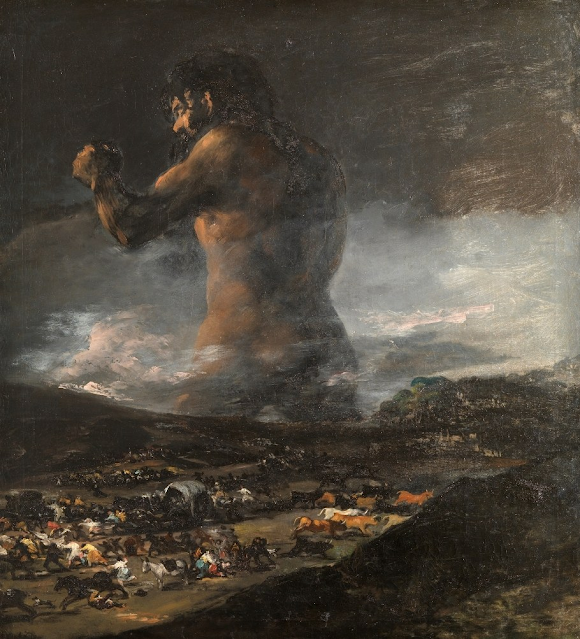
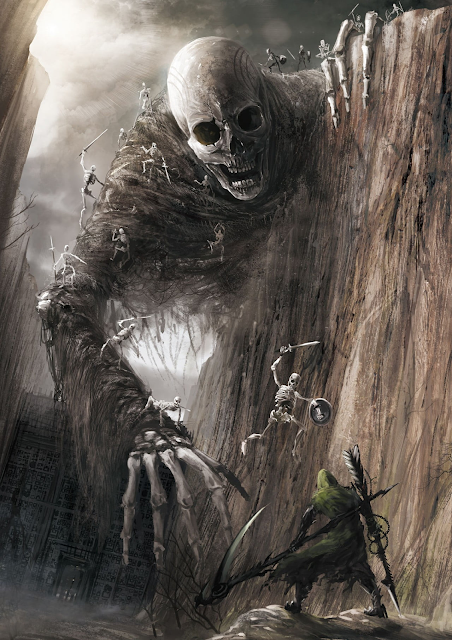
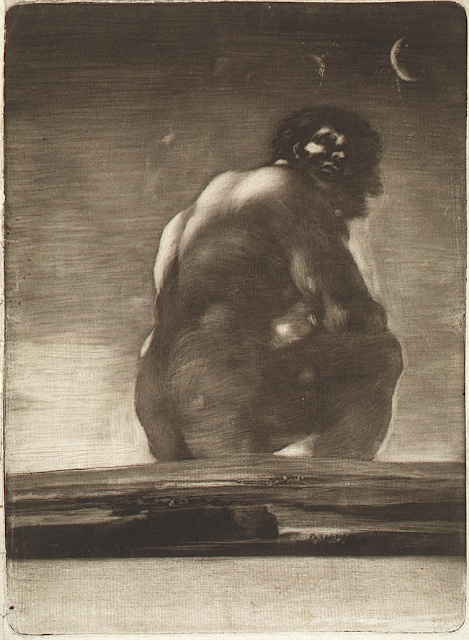
Size. They get bigger as they eat, and live, and grow. Petty Kings, of the sort that abound these days, are about twice as tall as a man. The High King, who has lived for a century and a half, is as tall as a tower.

Mindset. Kings are inhuman, hungering, imperious things. They do not think, nor feel, nor act like a people. The King demands pearls! Cattle! Riches! Dancing girls! Dancing boys! Dancing bears! Whales! Forests! Industry! Knights come and carry off your granaries and if they're not full enough then oh well, mark off your least favorite sun or daughter. The King needs to eat.

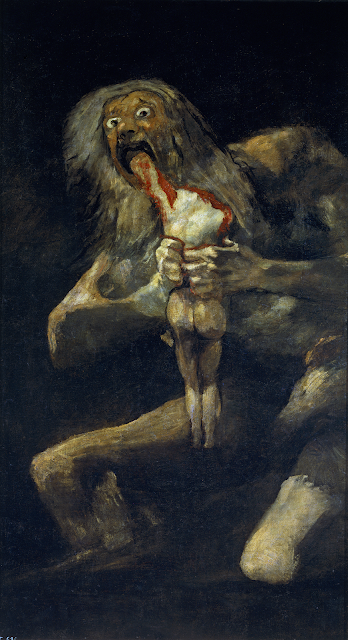
Diet. Kings eat one another and common folk too. They can restrain themselves from the latter if well-satiated with meat and grain, but if you put two Kings of approximately similar size in the same Kingdom one of them is going to kill and eat the other one. It's just a law of nature.

Power. Besides being at least as big as a house and twice as sturdy, the word of a King is law. They possess the ability to issue Commands, which must be obeyed by those within their Domain and are difficult to resist even for those without.

Kings of appropriately distinct sizes can form hierarchies, which is how the High King rules the petty Kings of the land and why they haven't all killed and eaten each other yet (they still get up to plenty of it, but less than they would without a High King in place). Obviously, he must consume any that grow large enough to threaten him. 

In today's fallen age this is about as big as Kings can get, but the histories tell of Grand Kings the size of cities. And in ages long past there was held to be an Emperor, the First King, who if he truly lived must have been the size of a mountain range...

Kings of ages past.

Why Are Kings?

It's the essential nature of Man. We are, in the most literal sense, monstrous consumers. There isn't an easy solution. Humanity has a problem, and the problem is Kings; but the individual Kings aren't the source, they just happen to be at the top of the pile for now. If there wasn't a High King, everyone would be King, and that would be even worse.

This is probably why elfs hate you.


No Kings, taskmasters.

A Digression On Dwarfs

If you want to fix Kings, you've got to, I don't know, abolish the entire feudal system, the whole damn thing, and probably create a weapon that will destroy Kung Fu. Industrialize past it. Develop capitalism, or state capitalism. That's what the dwarfs did (both/all of the above). 

That will, of course, cause other problems, and the dwarfs are here to prove it. 

Dwarfs used to be something much like Man, but they industrialized. They evolved beyond having Kings, and the parts of them that would become Kings atrophied and withered away to leave them something somewhat less than Man. That's why they're smaller than people. 

Half of the dwarfs are capitalist and the other half are state capitalist. The two halfs are, of course, at vicious and unending war. Dwarfs don't consume, they hoard and mise. They eat only as much as they need to be productive. When Dwarf Reagan dies he'll leave behind a stockpile of cave wheat and plump helmets sufficient to feed all the Kings of Man for a day, and when Dwarf Stalin dies all he will leave behind is a pair of boots and a pickaxe (because his stockpile belongs to the state).

The capitalist dwarfs sell giant armor and cannon to the Kings for their wars against each other, then laugh about Man's backward, King-having ways once they are gone, their business concluded.

The communist dwarfs back revolutionaries among the Kingdoms of Man, sending them arms and material and subverting their aims towards bureaucratic power.


I just can't wait to be King.

How Do I Become King?

Easy, you eat one. It's hard not to, once you've done the work of killing him: A King-corpse calls to the soul (and stomach) of all true Men. If you eat a King you become a King, no tricks or gotchas. You also become an NPC, but you can make your new character at the level of your old one (that just became a King) plus one. Tempting, right?

Of course, if you get yourself into a situation where you're a King in all but name, it'll probably happen on its own anyway. Difficult to escape, the Divine Right of Kings (to eat people).

A King on his throne.

What Does It Mean To Be King?

First of all, they're huge. Petty Kings are about 12' tall with (extra) HD and +4 STR. I guess for each tier of King above that, you just double that number, so maybe there are some Old Kings that are 24' tall with 8 (extra) HD and +8 STR, and the High King is 36' tall with 12 (extra) HD and +12 STR. It's a good thing the Great Kings, Emperors, and First King are all long dead and you don't have to worry about how big they must have been.

Second of all, they're commanding. A King has one Majesty Die for each tier of size he is, which he can roll to boss people around in much the same way a Wizard uses Magic Dice to boss around spells. A King also gets +1 MD for (each of) wearing a crown, wielding a scepter, or sitting on a throne of suitable opulence for his station in the exact same way that a Wizard gets MD for wearing a sufficiently magical Wizard Robe.

Majesty Dice automatically work on anyone the King can be said to rule, and never work on other Kings (even lesser ones). PCs, anarchiststhe subjects of other Kings, and so on fall somewhere in the middle and get to save. Histories tell of Kings who could command seas to part, skies to clear, and Men to fall dead on the spot, but that art has been lost or else is being carefully concealed.

When a King eats another King that's bigger than he is, he absorbs his mass with 100% efficiency. The new King is the size of both Kings added together. When a King eats another King smaller than he is, or anyone who isn't a King, he digests them and shits out the bones.

Is this post done? Did I forget anything? How do you kill the High King and end feudalism properly, without taking his place? Where do the elfs come in? These are the questions which must be answered, if we are to progress as a people.

Sunday, July 18, 2021

He Who Greets the Sun with a Hymn Does Not Notice the Small Spots (Class: Paladin)

The final "base class" for the Mountain, just in timeat least a week and a half too late for me to run a game. These owe, obviously, a great debt to the masked clerics of G_d.

Three of Wands.

Class: Paladin

Every paladin has a Revelation; a vision which causes them to break with the dogma of the Church and leads them to the Mountain on a divine mission. Every paladin is a prophet, an apostate, and a heretic, blessed with divine self-righteousness and strength of faith; it is they who have heard the word of G_d, they who speak holy truth, and they who decide what is divine necessity and what is false ceremony.

There's a big Church back in the Civilized Lands, with complex theology and dogma and all of that nonsense. You're not connected to it and don't have to worry about any of that. You may end up with one or two strictures by virtue of your Revelation and Miracles, but that's it. The things you do are holy by definition; feel free to associate with witches and thiefs and by your presence they shall be redeemed. 

Every template of Paladin you have gives you +1 to resisting coercion and withstanding hardship. Your second and fourth templates also each give you +1 to-hit. My system doesn't actually have proficiency so I don't know why I keep listing them off like it does and I'm not going to anymore.

Skills: 1. Farming 2. Rhetoric 3. Prophecy

Starting Equipment: A holy symbol, a short stavepractical clothing and a rucksack, a wool blanket, waterskin, 3 torches, 3 iron rations, 50' of stout hempen rope, a book of hymns and folk songs, and one relic from the list at the end.

A Orisons, First Revelation
B Miracles, +1 MD
C Fury, Second Revelation
D Coronation, +1 MD

A: Orisons
At will, you may do any of the following:

  • Conjure a torch-sized flame into your cupped palm.
  • Consecrate a man-made flame of bonfire size or smaller, causing it to produce no ash nor smoke.
  • Refuse to be burned by any fire of not-specifically-malicious intent.
  • Know the position of the sun, the approximate time and exact date, and which cardinal direction you are facing.

A: Revelation
As a paladin, you have received a revelation; a prophetic vision with more weight and detail to it than the nightmarish dreams suffered by most who are called to the Mountain, shewing them a potential End of the World as well as a means by which it may be averted. Each paladin's revelation is unique, but four broad themes seem to be present:

  1. Revelation of the Hearth (Choirs)
    Throngs of the faithful gather around great bonfires to repel the assault of infernal forces, vast armies of black glass and iridescent chitin. We're strongest together; our bonds are our might.
    Those who have received the revelation of the hearth know that there is nothing greater than what people can achieve in companionship. Their most important duty is to find allies against the darkness.

    Hearth paladins shave and tattoo their heads and bodies, and are sometimes called Choirs. Their primary restriction is that they may not cause harm to one who has not acted violently in their presence, and their secondary restriction is that they must not consume the flesh nor eggs of anything with or without a face.

    1. Castigation
      Upon receiving your first revelation, your voice cannot be ignored, muffled, or muted. When you spend an action to deliver curses and invective with appropriate gravity, your target must check morale. If they succeed, they must primarily target you for the remainder of the encounter—failure means they break, flee, etc as normal.

    2. God Throat
      Upon receiving your second revelation you gain the service of the angel known as WORD, so styled because she answers to many names. Her dossier can be found at the end of the list of angels far below.

  2. Revelation of Gunpowder (Judges)
    Steel-eyed inquisitors plumb the depths of the world, unearthing great fiends in their lairs and striking them down. Victory can be won only by discovering and destroying the greatest evils before they can destroy us.
    Those who have received the revelation of gunpowder know that they are soldiers in an unending war. Their most important duty is to slay the enemies of righteousness before they are able to act.

    Gunpowder paladins weave wooden tokens into their hair, wear muted colors, wield hammers and pistols, and are sometimes called Judges or Inquisitors. Their primary restriction is that they must not turn their back on an opportunity to destroy or prevent evil, and their secondary restriction is that they may not carry nor wield bladed instruments.

    1. Bloodhound
      Upon receiving your first revelation your senses are finely attuned to signs beyond the purely physical, allowing you to smell the distinctive reek of secrecy. This won't tell you anything about secrets except their existence, but is of great help in discovering traps, secret doors and compartments, people who are trying to hide, et cetera.

    2. Veritas Dei
      Upon receiving your second revelation your very soul revolts against falsehood, causing you 1 damage for each consciously spoken untruth you utter and allowing you to see lies and instinctively judge the weight of souls.

  3. Revelation of the Torch (Contemplatives)
    A lone hero scales an infinite incline, torch held high, tested mentally, physically, and in spirit. The only one who can be counted on, in the end, is oneself; so each must individually become the best, strongest self possible if we are to survive as a whole.
    Those who have received the revelation of the torch know that relentless self-improvement is the highest virtue. Their most important duty is to better themselves in every fashion—become stronger, healthier, more virtuous, better educatedand to help others do the same.

    Torch paladins oil their bodies and bare their hands and feet, and are sometimes called Apotheosites, Templar, and Contemplatives. Their primary restriction is that they must test themselves against the strong and vice versa, and their secondary restriction is that they may not tell to others what they have not witnessed themselves.

    1. Sacred Martial Arts
      Upon receiving your first revelation your fists, knees, elbows, forehead, and any other part of your body you could conceivably strike someone with are are light weapons, and you are a skilled wrestler. When you hit someone with a melee attack, you can attempt a free combat maneuver against them if you name and describe your action as a special move (or use one previously named and described that makes sense in context). You can't use the same special move twice in the same combat.

    2. Force Projection
      Upon receiving your second revelation you master techniques of hand-to-hand combat far beyond the normal limits of human achievement. Your unarmed melee attacks have a 30' reach and you can run on walls, spikes, or water as long as you end your turn on solid footing. Additional secret techniques may become available to you in your travels.

  4. Revelation of the Mirror (Scriveners)
    Scholars delve deep in libraries and laboratories, their frenetic study essential despite the calamity outside, until finally, finally, the Secret which justifies any consequence is uncovered, the Work complete. Something terrible is Coming, and we'd be foolish indeed to discard any weapon which might be raised against it.
    Those who have received the revelation of the mirror know that all the evils of the world pale in comparison to the great enemy that comes against it, and that the right or wrong of a sword or rifle lie in the hands that wield it. Their most important duty is to seek out power and knowledge that is lost, disdained, forgotten or forbidden.

    Mirrored paladins cover their faces—with blank-featured or silvered masks when possible, or simple cloth when not—and are sometimes called Lenses, Silverfish, Warminds, and Scriveners. Their primary restriction is that they may not consciously allow knowledge to be lost, and their secondary restriction is that they must share knowledge with any who, in their estimation, should make use of it.

    1. Holy Seals
      Upon receiving your first revelation, each time you command an angel you may cause up to [templates] blessed seals in your possession to spontaneously combust: For each that does, you may add or replace one MD. You can produce new seals out of 10 sp in wax, art supplies, and precious metals, at a rate of one per day as a part of your normal rest, and they each take up 1/3 of a slot.

      You also gain the ability to perceive and communicate with the spirit world slightly earlier than your fellows, and the services of one angel rolled on the list from the end with 1d6 rather than 1d12.

    2. Coronal Mass Ejection
      Upon receiving your second revelation you are able to resurrect a technique from the holy books long thought apocryphal: The ability to project an exploding laser beam directly out of your forehead at one billion miles per hour. Once per combat round, you may deal 1d6 holy fire damage to anything you can see.

Breaking your secondary restriction causes an immediate mishap. Breaking your primary restriction causes an immediate doom.

B: Miracles
The world of spirits and spells reveals itself to you, and you gain the service of an angel (roll 1d12) whom you are able to command through the use of Miracle Dice in exactly the same way someone else might cast a spell with Magic Dice

The saints of the Church are numerous, and each day of the year is the feast day of one or more, with collisions being the source of fierce dogmatic arguments. Your MD are replenished at dawn at a rate of 1 MD per each of the following saintly attributes you are able to declare—up to your maximum MD—regardless of whether you rested or not:

  • Name and/or title
  • Portfolio
  • Saintly deeds
  • Method of martyrdom
  • Ritual observances
For example you might declare, "Today is the day of Giuseppe the Maligned, patron saint of psychiatry and comedy, who restored the grand mural of the Holy City, and was cast from a high cliff, and on whose day we must turn every handshake into an arm-wrestle," and have declared all five attributes, and regain up to 5 MD if you somehow have that many which should be impossible.

Upon gaining template D, you receive the services of a second angel of your choice.

C: Fury
When engaged in melee combat, you may make one extra attack each round for free. The extra attack doesn't, technically, have to be a melee one.

D: Coronation
You develop a blessed halo, the surest sign of your divine significance. This takes the form of either a diffuse radiance projected around your body or a hard-edged circlet of light hovering over your head. Regardless of its form, it casts light as a torch and protects you from harm, granting +1 AC. It is also very impressive.

Angels

As a spellcaster, you are able to perceive and communicate with the spirits known commonly as spells. As a paladin, those available to you to command (by means of your MD) are termed angels, the handmaidens of G_d.

Other spells may exist, and you may be able to bribe, coerce, or otherwise convince them to join you. By the same token, experienced paladins and such met in the wild may travel with spells outside this list.
  1. Missile
    She is clad in a sleekly articulated plate harness, and wields a brace of darts which become visible when she casts them at a target. She is blunt in her manner and could be seen as arrogant, were her aim any less true.
    Throws [dice] darts, each of which unerringly strikes a target of your choice within sight for 4 damage. The darts of your Missile are formed from hard-edged white light and resemble...
    1. Dueling swords
    2. Arrows
    3. Spears
    4. Needles
    5. Birds of prey
    6. Longswords
    7. Throwing knives
    8. Circles or discs
    9. Shuriken
    10. Sidewinders

  2. Burning Hands
    She is four-armed and muscular, bare from the waist up. Her fists are ever-clenched, each wreathed in flames too hot to fully consider.
    Heats the palms of your hands to a significant fraction of the temperature of the sun for [dice] minutes, while protecting you from the effects thereof. This is probably sufficient to melt through at least [sum] inches of stone or steel, set flammable objects on fire, fuse sand into brittle glass, and so on, and you may reroll all invested MD as damage dice when open-palm slapping someone with them. Alternatively, holding your hands up palm-outward is probably sufficient to ward away most potential threats without actual violence.

  3. Scorching Ray
    Her bare head floats in the midst of a conflagration and heat haze, her body—if she has one—fully concealed. Her eyes burn a blank and angry red. She is colorblind.
    Projects up to [dice] rays of burning energy towards a target or targets of your choice within bowshot. Make a ranged attack roll against AC 10 for each; any that hit deal [best] damage.

  4. Fireball
    She is ineffably majestic, impossibly beautiful, a Queen among angels crowned by a third eye upon her brow and framed by nine wings behind her. She wears a fractally ornate gown and does not speak so much as command.
    Streaks to the designated area within bowshot and explodes, dealing [sum] + [dice] damage to everything within a 20' radius with a DEX roll for half.

  5. Lightning
    She is tense, almost nervous, filled with energy, a slightly sinister cast to her expressions. She is eager to create her effect, and has been known to—under very specific circumstances—disobey orders.
    Swoops through an area 10' wide and [dice]*10' long, dealing [sum] + [dice] damage to anyone and anything in her path with a STR roll for half.

  6. Supernova
    She is serene, radiant, beatific in both bearing and conduct. She dresses for mourning, and her eyes are sad.
    Causes the targeted corpse to crumple inward and then explode in a flare of brilliant energy, dealing [sum] * 2 damage to everything within a 20' radius with a DEX roll for half. If targeted on an undead that you do not personally control, they may roll CHA to avoid exploding. Requires a minimum investment of MD proportionate to the size of corpse she is to detonate:
    • 1 MD - A hobgoblin, orc, or smaller 
    • 2 MD - A bugbear, horse, minotaur, or smaller
    • 3 MD - An elephant, ogre, or smaller
    • 4 MD - A whale, giant, or smaller
    • 5 MD - A dragon, kraken, or smaller

  7. Wall of Fire
    She wears a general officer's uniform in an unfamiliar pattern, resplendent with medals and ribbons and braid. She has excellent tactical instincts, but a poor grasp of modern technology.
    Conjures up to [dice] 10' × 10' × 5' sheets of searing flame, within a stone's throw, in whatever contiguous formation you desire and lasting for [sum] minutes. Any who enter or begin their turn within the area take [dice]d6 damage, and catch fire for an additional 1d6 damage per round until extinguished. If placed over a creature, they may roll DEX in order to escape the area before the sheets manifest. If cast with 3 or more MD, her conjured wall instead lasts for [sum] hours. If cast with 4 or more MD, it is permanent.

  8. Radiate
    She is slender and completely hairless, clad in a loose, gauzy shift. Her skeleton is starkly visible through her skin and garment. She perceives the world in wavelengths impossible to us, and does not understand the fragility of humans.
    Causes the targeted object within a stone's throw to radiate energy for up to [sum] hours, of a type dependent on how many MD were invested in her:
    • 1 MD - Casts bright illumination out to 60', warms like a hearth.
    • 2 MD - Casts bright illumination within sight range, counts as sunlight, warms like a pyre.
    • 3 MD - Casts invisible rays of blinding heat, deals [dice] damage per round within 60', any who look at it within that range roll STR or are permanently blinded. Blocked by anything sufficiently opaque.
    • 4 MD - Casts intangible rays of poison fire, deals [dice] STR damage per round within 30' to all targets, including other angels and spells, et cetera. Only blocked by lead or stone.

  9. Glory
    She is thick-wristed and -ankled, her face hidden behind a golden caricature mask with a giant, spiked halo affixed to its edges. She bears two massive golden swords which she wields in elaborate flourishes, and is fond of elaborate posing to punctuate her words.
    Increases your STR and CHA by [dice] each and grants you immunity to poison, fear, and other maladies for up to [sum] minutes. The additional HP you gain from increased STR are lost, in this case, before your "real" HP.

  10. Shield
    She appears metal-fleshed, her limbs delicate armatures of piston and ball-joint beneath ornamented silver plating. She speaks only to narrate threat coefficients, with flat affect. Her appellative Shield is starkly utilitarian in contrast, a round-cornered rectangle of undecorated polished steel. 
    Uses her Shield to defend you or a target of your choice within arm's reach, granting +[dice] AC for up to [sum] hours against any attack she is aware of and completely negating Missiles and Rays.

  11. Heal
    Wears a linen robe, clinical, detached, omits names and pronouns when speaking. Seen it all before, twice.
    Heals the touched target for [sum] + [dice] HP. Alternatively, can be directed to solve specific problems depending on the MD invested in her:
    • 1 MD - No alternatives.
    • 2 MD - Mend broken bones or other long-term wounds.
    • 3 MD - Cure a malady such as disease or poison.
    • 4 MD - Reattach recently severed limbs.
    • 5 MD - Regrow missing limbs or organs.

  12. Hold
    She is a sinister figure in white, blindfolded, bound in chains and one of those funny jackets that won't let you check your wristwatch. She speaks in a piercing, imperious voice.
    Closes and locks (if applicable; doors slam shut, drawbridges slam up, half-drawn swords slam back in their scabbards) a target within a stone's throw, then Holds it in place for up to [sum] rounds. If the target is secured, attended, or sapient, Hold is [dice] level with +[best] STR, and skilled at wrestling.

  • WORD
    She is dressed unassumingly in simple linen and scripture—the latter crawling over every inch of her skin. Her features are regal, more imposing than they are appealing.
    Delivers a divine pronouncement of up to [dice] words, using her WORD as the main verb. Targets may not be specified except as a part of the pronouncement—speak carefully. Those with souls or personalities may roll CHA to avoid or reduce direct effects. If used to harm something with an HP value, she will usually deal [sum] damage as well as any incidental effects of the WORD used.

    Roll two WORDs from the following list by which you may call your WORD:
    1. Blind
    2. Burn
    3. Boil
    4. Desiccate
    5. Heat
    6. Illuminate
    7. Imprison
    8. Melt
    9. Reveal
    10. Rise
    11. Sequester
    12. Ward

G_dly Mishaps

  1. You attract a crow or raven which will forevermore follow and spy on you when you are under open sky. If trapped or killed, the corvid is replaced within 1d6 days.
  2. Your eyes turn smoky black, blinding you for [dice] rounds. They do not clear fully, leaving you with at least one permanent sunspot in your vision.
  3. Your wounds and scars open and [sum] fat, three-inch-long maggots plop sickeningly out at a rate of one per round. Each maggot that drops deals you 1 damage. The maggots taste like motor oil, and anyone eating one heals 1 HP.
  4. Your head is transformed into that of a dog for [sum] minutes, granting you the ability to speak and understand Arqot but unable to converse in any other language for the duration.
  5. Dogs, horses, and other domesticated animals will see you as a hated enemy until the next dawn, and either attack you viciously or flee in terror depending on temperament.
  6. Your reflection fades by about  of its original opacity. This effect is permanent, and stacks—after 10 fadings, you no longer have a reflection. Further results cause a different reflection to fade back in at the same rate; one with no visible resemblance to you, and that doesn't match up to your movements. Once your reflection has faded 10 times out and 10 times back in, its negative is as real as its positive once was. 10 more and it's as real as you are yourself.

Doom of the Sun

  1. You become able to hear the voice of the Sun. It is sonorous, commanding, quintuply resonant. The loudest voice speaks in an obtuse language which bears resemblances to both angelfire and the old tongue, and can be understood if you speak either of those languages. It is very distracting, causing a -2 penalty to all d20 rolls when exposed to natural sunlight, reduced to -1 if only partially exposed such as while indoors or under an overcast sky.
  2. Sunlight pours forth from your eyes and mouth whenever they are open, casting bright illumination in a 60' cone. The penalty is no longer escapable, even with your eyes and mouth held shut.
  3. You emit sunlight from your entire body, casting bright illumination in an unlimited radius and blinding any who look directly at you. The voice of the Sun is now audible to others in your presence and inflicts the same penalty on them, and for you personally the penalty is doubled and sufficient to prevent you from commanding any spells.
The Doom of the Sun can be escaped by seeing the Sun destroyed, or by journeying to its surface and consuming a piece of whatever rules there.


Holy Relics

  1. Holy Symbol. An eight rayed sun-disk, traditionally copper but sometimes wood or gold. Yours is bigger than most, but it still doesn't take up any slots as long as you're wearing it.
  2. Short Staff. A sturdy inch-thick dowel of somewhat less than your height, making it a medium weapon while retaining some effectiveness as a walking stick. 1 slot.
  3. Practical Clothing. Sturdy wool and linen, unassuming, humble. 0 slots worn.
  4. Wool Blanket. Large enough to wrap oneself in fully, or double up and wear as a cloak. 1 slot.
  5. Waterskin. Essential. 1 slot when full.
  6. 3 Torches. Simple sticks wrapped in hessian and soaked in pitch or wax. Burn for an hour each, cast bright light out to 30' and dim light twice that distance. 1 slot total.
  7. 3 Iron Rations. Thick cakes of preserved meat, parched grain, and chocolate. Won't go bad for months as long as you keep them dry. 1 slot total.
  8. 50' Hempen Rope. Coarse, thick, and unpleasant to the hand. 1 slot.
  9. Book of Hymns and Folk Songs. Lyrics and rough melodies; not detailed scores. Heavily annotated in at least three hands, before including yours. 1/3 slot.
  10. Bottle of Holy Water. Spiritually active, powerfully caustic to devils and some forms of undead. Drinking it cures demon-caused maladies. 1/3 slot.
  11. Reactive Sledge. A sacred tool of gunpowder paladins. A heavy weapon which explodes when struck hard against something to deal an additional 2d6 damage in a 5' radius (including to the wielder), DEX half. 2 slots, one use only.
  12. 3 Blessed Seals. Heavily decorated discs of stamped, gilded wax. A mirrored paladin may be able to make use of them. 1 slot total.
  13. Book of Church Secrets. An unpleasant accounting. Could be used as blackmail, or to get someone in a lot of trouble. Someone who might be you. 1/3 slot.
  14. Prayer Beads. Very soothing to fiddle with, grants advantage on saves against fear and the like when wielded. No slots, I think.
  15. Censer. Silver, ornate, suspended on three feet of fine chain. Angels and other spells are attracted to the scent of incense burned in it. 1 slot.
  16. Cursed Incense. Reminds any who smell it of their own mortality, and puts them in a foul mood. Not actually cursed, just universally culturally significant. 10 doses, no slots.
  17. Pistol and shot and powder. A light firearm which deals 1d8 damage, takes 4 full rounds to reload, and can be safely fired in melee combat. 1/3 slot for the pistol itself, 1 slot each for 10 rounds and a horn with 10 doses of powder.
  18. A Dog. Man's best friend. Happy, friendly, 1 HD, good at searching things out and eating garbage and not at all good at fighting. 3 slots if you have to carry it around for some reason.
  19. A Horse. Would ordinarily be man's other best friend, but this one is ill-tempered, cloven-hooved, long-tongued, fond of eating carrion, and refuses to be ridden. 3 HD, much too big to carry.
  20. Something weird. Roll 1d6:
    1. Golden wedding band. Powerfully cursed, has some weird writing inside it, attracts ghosts when worn. You're supposed to throw this into a pit at the heart of the Mountain, I think. No slots.
    2. The true Tao. You're not supposed to be able to write this down, but someone did on a scroll about 1' wide and 3' long and now nobody knows what to do with it. Solid (and inviolable) to ghosts and spells. 1/3 slot.
    3. Jeweler's loupe. Displays a number above the head of each person observed through it commensurate to the quality of their kung fu.
    4. Socks woven from the hair of a saint. Refuse to touch impure things, allowing you to (with practice) hover above the surface of seawater, uncut grass, &c. No slots.
    5. An endpaper torn from the first holy book. Completely blank, blackens in the presence of elfs and giants. Do not burn it. No slots.
    6. NOT A SWORD, name scratched crudely into scabbard. He is a +0 heavy sword (2d6) of make indeterminate due to being completely rusted into his scabbard. Believes he has been fighting an bitter war against completely imagined enemies for the past millennia. Doesn't count as bearing an edge, in case you're a gunpowder paladin

Tuesday, July 6, 2021

Do You Not Realize from What I Say to You Who I Am? (Class: False Witch)


A continuation of the Work of preparing PC classes for the Mountain. These in particular are archetypes for my Ultimate Thief and Fighter.

False Witches. They're called Witches because they use magic. They're called False because they aren't actually magical at all themselves. They are, basically, specialists or thieves or rogues or what have you. Scientists. People who have figured out how to manipulate the world in specific ways, without ever performing something that we'd call magic directly.

They're a lot easier to run out of town or burn at the stake, etc, than real witches are.

Five of Swords.

Archetype: Sword Witch

The sword is the ultimate tool—you can hunt with them, eat with them, use them to start a fire or cut down a tree, and they’re the primary symbol of skill at arms across the world. 
This is a Thief archetype, properly speaking, but I suppose I can't really stop you from jamming it on something else.

Starting Equipment: A MAGIC SWORD, a normal sword, dark clothing, a waterskin and 3 days trail rations, a bullseye lantern and flint and oil, soft boots, and a cloak
Benefit: You can carry any number of swords tied into a bundle in the space of the largest single one you possess, and draw blades from it unerringly without spending an action. You can identify all properties of a blade by fucking around with it for an hour. If you didn't speak swordsong already, you do now.
Drawback: Your opportunism only works on sword attacks. Sword-wielders will be naturally jealous of you.

1d12 Starting Magic Swords (or 1d8 if you're Small)

  1. THERE I CARRIED, name engraved on guard. He is a +0 light baselard (1d6) of phosphoric steel, with oxhide-bound hilt, catseye pommel, and double guard. Smells very pleasant.
  2. GONE TOO FAR, sings name when drawn. He is a +0 medium langmesser (1d8) of silvered bone, with horsehide-bound hilt and double blade. Can sever and reattach hands without causing damage. The formerly handed retain control over them while severed.
  3. CANNIBAL MEAT EATER, name engraved on blade. They are a +0 medium shamshir (1d8) of leaden copper, wolfshead pommel, and square guard. Devours sharpness of other blades when pressed against them.
  4. TAKEN AND LOST, name known by all. It is a +0 medium takouba (1d8) of mercurial black iron, with leechglass guard. Grants wielder 60' echolocation when speaking name.
  5. SOME ASSEMBLY REQUIRED, name engraved in fuller. She is a +0 medium tulwar (1d8) of arsenical bronze, with ring pommel and small spinels in guard. Those slain by the blade will grant haruspecious insight through examination of their entrails.
  6. PROBLEMS YET UNSOLVED, spells name in spilled blood. He is a +1 medium bastard sword (1d8) of steel, with sheepskin-bound hilt. Those slain by the blade will trade faces permanently with the wielder.
  7. WINNING A FIGHT, name known by all. She is a +0 medium falchion (1d8) of iridian steel, with ring pommel and triangle pattern of dark-and-light along blade. Knows what the face of G_d looks like, and loudly announces match percentage of anything she is pointed at.
  8. TWO FACED BITCH, name engraved on blade. He is a +2 medium dadao (1d8) of mithril, with round pommel. Refuses to be drawn against anyone with better kung fu than yours.
  9. SHAME IN DEFEAT, name engraved in fuller. She is a +0 heavy greatsword (2d6) of thorian black iron, with missing pommel. Her destruction will cause a natural disaster.
  10. SEVEN STARS SHINE, whispers name when drawn. She is a +0 heavy longsword (2d6) of ironwood, with yew hilt. Can harm angels, demons, and other spells.
  11. WALK BENEATH WAVES, name engraved in fuller. He is a +1 heavy bohrschwert (1d10, treat all AC as 10) of mithril, with snakeskin-bound hilt, square guard, and filigreed blade. Grounds out lightning within 60', which can be hazardous to the wielder.
  12. MISSING MY POMMEL, name etched into haft. She is a +0 heavy glaive (1d10, 10' reach) of brazen copper, with oversized guard and large turquoise at base of blade. Cutting power reaches beyond blade; 30' range when slashing.

1d6 Normal Swords (or 1d3 if you're Small)

  1. Short sword (light weapon, 1d6 damage)
  2. Single-edged sword (medium weapon, 1d8 damage)
  3. Double-edged sword (medium weapon, 1d8 damage)
  4. Two-handed sword (heavy weapon, 2d6 damage)
  5. Pole-sword (heavy weapon, 1d10 damage, 10' reach)
  6. Edgeless sword (heavy weapon, 1d10 damage, treat all AC as 10)

Seven of Cups.

Archetype: Bottle Witch

The drunk who waves his bottle, saying, it’s mine, I bought it with the money from my wages (paid by private or State institutions), while he is a victim of the Capital form, is also a usufructuary traitor to the health of the species. And so is the idiot who smokes cigarettes! Such “property” will be eliminated from the higher organization of society.
This, also, is intended as a Thief archetype.

Starting Equipment: A ghost in ghost-bottle, an empty ghost-bottle, priming reagents for ghost-bottles, a shovel, a prybar, dark clothing, a waterskin and 3 days trail rations, a bullseye lantern and flint and oilsoft boots, and a cloak
Benefits: You can prepare ghost-bottles, and use them with less risk than anyone else.
Drawbacks: Those who care about the final fate of their souls will be naturally wary of you.

Ghost-Bottles

Priming a ghost-bottle for use requires an empty ghost-bottle and one hour of focused work with access to open flame and simple reagents (lead, antimony, rock salt, water, bitter nightshade, and a bit of blood).

Ghost-bottles take up 1/3 inventory slot each. The priming reagents take up 1 slot in total.

Once primed, a ghost-bottle may be used to capture dying souls, ghosts, demons, spells, elementals, or angels if opened toward them at exactly the right moment. For most people this would take some combination of a DEX check (to get the timing right) and an opposed CHA roll (to overpower the ghost), but the first isn't a problem for bottle witches as long as they're prepared and the second isn't a problem as long as they're not trying to catch an emperor or an archdemon etc.

Once captured, a bottle-ghost may be used in one of several ways:
  • You can drink it. This kills the bottle-ghost, heals you, will probably have other effects, and is rightly seen by all intelligent creatures as an incredibly evil act.
  • You can let it go for good. This empties the ghost-bottle, so you can prime it to capture another ghost.
  • You can send it to scout a nearby area. This takes 10 minutes, after which the ghost will return to its bottle with 1d6 pieces of information. Ghosts are best at sensing spellcasters, powerful magic, and other spiritual beings, and very bad at sensing architecture and mundane items—and will return information in approximately this order. This is usually safe, unless something that can both see and affect ghosts is in the area to be scouted.
  • You can send it to haunt a creature. The ghost and its target roll opposed CHA—if the ghost wins, it imposes a penalty equal to its HD on all actions the target takes. Should the target die while being haunted, the ghost will attempt to possess it (as below)—if the ghost fails, it dissipates permanently.
  • You can attempt to have it possess something. The ghost and its target roll opposed CHA—if the ghost wins, it now controls the target's actions. If the target is of equal HD to the ghost or better, the target may try again each round until successful—at which point the ghost dissipates permanently. Ghosts possessing a body are under no obligation to their bottle-witch and may be hostile, particularly if recently captured. Inanimate or unconscious targets don't get to save.
  • Maybe it can do something else, depending on who it is. These additional abilities—active ones—are only usable once per 'scene' or so; a ghost needs time to rest.
All of these are technically possible for non-bottle-witches to accomplish, but much riskier and likely to result in the ghost dissipating permanently regardless of outcome.

1d20 Starting Bottle-Ghosts

  1. Skilled Sailor, 1 HD—Has a little ship in the bottle with him.
  2. Really Good Dog, 1 HD—Eager to please, not very bright.
  3. Optimistic Beheading Victim, 1 HD—Very positive.
  4. A Flat Miner, 1 HD—Passively warns of pitfalls and crush hazards.
  5. Unlucky Thief, 1 HD—Gives 2d6 pieces of information when scouting.
  6. Your Great-Grandparent, 1 HD—Knows your family history. +1 INT.
  7. Really Annoying Bard, 1 HD—Counts as 2 HD for haunting.
  8. Hungry Poacher, 1 HD—Also notes all animals when scouting.
  9. Cheating Gambler, 1 HD—Can rig games of chance in your favor.
  10. Opium Scholar, 1 HD—Spins elaborate false histories. +2 INT.
  11. Obsessed Locksmith, 1 HD—Can pick locks for you.
  12. Paranoid Apprentice, 1 HD—Passively senses the presence or absence of wizards.
  13. Aggressive Goat, 1 HD—Can shove man-sized or smaller creatures 5' at a time.
  14. Anchorite Scribe, 1 HD—Is literate, can read to you. +3 INT.
  15. Primitive "Botanist", 1 HD—Knows which mushrooms and berries will make you shit blood.
  16. Mountain Lion, 2 HD—Makes incredibly realistic mountain lion noises.
  17. Old Soldier, 2 HD—Also notes arms and armor when scouting.
  18. Loyal Ox, 2 HD—Can move unattended ox-portable object up to 60'.
  19. Spooky Horse, 2 HD—Can carry you 30' in a massive leap.
  20. Ancient Sword Master, 4 HD—Refuses to haunt or scout, it's beneath her.

Eight of Cups.

Archetype: Mask Witch

Some students do not realize the true man in a mask
Because they recognize ego-soul.
Ego-soul is the seed of birth and death,
And foolish people call it the true man.
This, also also, is intended as a Thief archetype.

Starting Equipment: A corpse-mask, a regular mask, three very sharp knives in various sizes, a formidable sewing kit, a bottle of formaldehydedark clothing, a waterskin and 3 days trail rations, a bullseye lantern and flint and oilsoft boots, and a cloak
Benefits: You can prepare corpse-masks, and wear them to gain strange powers.
Drawbacks: Those who care about the final fate of their bodies will be naturally wary of you.

Corpse-Masks

Someone who knows how (that's you) can make a death mask out of someone's face with the aid of a good sewing kit and a wood or bone frame in, I don't know, about an hour, maybe longer if they've got a significantly different sized head. Someone who knows how (also you) can gain certain powers or abilities from wearing said mask. These two skills do not ordinarily coreside in the same person. That makes you special.

The bare minimum effect for a corpse-mask is +1 to the highest stat of the corpse it was made from, while you wear it. More often, they'll give you a weird little passive ability instead. Exceptionally powerful corpse-masks may even have some effect when worn by a non-mask-witch.

Masks take up 1/3 slot each, and the sewing kit is another 1/3. Switching between masks takes at least an action, even if you've got them all handy.

1d10 Starting Corpse-Masks

  1. Ass—Gain +1 STR.
  2. Dancer—Gain +1 DEX.
  3. Giant Raven—Gain +1 INT.
  4. Beautiful Child—Gain +1 CHA.
  5. Crone—Gain skill at divining and botany and midwifery.
  6. Giant Owl—Can do the spooky head thing, and see just fine in starlight.
  7. Wolf—Gain a bite attack for 1d6 damage, double that against creatures that speak a civilized tongue or Arqot.
  8. Bear—Gain +2 STR.
  9. Giant Buzzard—Can eat carrion with no risk or displeasure.
  10. GIANT SPIDER AAAAAA—Gain one adaptation rolled from the list.

1d10 Completely Normal Masks With No Mystical Powers

  1. Monkey
  2. Woman
  3. Elder
  4. Dog
  5. Strange Animal
  6. Infant
  7. Skull
  8. Snake
  9. Blank
  10. Devil
Knight of Disks.

Archetype: Gutter Knight

The ancient kings secured good government of their kingdoms through learning of honor, of humility, of virtue, and by acting charitably to those lesser than they. It is the duty of every great knight, to find a quest in life, and brave the demons of the age. 
This is not a thief archetype. It's not even really a false witch. Certainly nobody is calling gutter knights witches and running them out of town. Quite the opposite, in fact. This is intended as an archetype of Ultimate Fighter

Gutter knights are a part of the noble caste of the civilized world, scions of great houses of the River Kingdoms and Charter Nations. They journey and commit acts of conspicuous heroism as a coming-of-age ritual, before eventually hanging up their cloak and returning to take their place in the gentry; theoretically humbled and made wiser by their experience. In practice few venture far from home, but some—more dedicated or naive than most, or attempting to distinguish themselves from their siblings—do wind up on the shores of the Mountain

There is no moth elf nobility, but some individuals have taken up the tradition nonetheless—their blades rusted and crudely made, their armor unpolished, their quilted favor-cloaks bedraggled, tattered and nearly bare, and their actions unbound by the centuries of tradition that weigh heavily on other gutter knights.

Starting Equipment: signet ring and sealing wax, a heavy steel longsword, odachi, or zhanmadao, a masterfully crafted plate cuirass, an ostentatious formal outfit, a set of well-crafted traveling clothes, a fine tabard, silk pyjamas, your quilted favor-cloak and a single patch-favor, jewelry worth 300 sp, an astrolabe, a sextant, spyglass, compass, and map each in their own carrying case, and no food or water. Moth elf "gutter knights" have regular equipment instead, besides the favor-cloak.
Benefits: You can carry and use patch-favors, tokens of magical appreciation for your errantry. Unless you are a moth elf, you may rely on your family name to secure respect, food, lodging, and knightly quests in any settlement large enough to have a mayor.
Drawbacks: You are not permitted to carry any currency nor possess any items not carried by you personally with the exception of a mount, saddle, and riding tack. Unless you are a moth elf, you may not strike a surprised, surrendered, or helpless humanoid foe.

Patch-Favors

A patch-favor is a little scrap of canvas, linen, or burlap, painted or embroidered with a token. They are traditionally granted to gutter knights for the completion of knightly quests, but if there's nobody around capable or willing of creating one the gutter knight is permitted to make their own to commemorate a particularly noble deed.

Patch-favors take an action to pull from one's quilted favor-cloak and slap on something within arm's reach. They require contact with both the gutter knight and their intended target to activate, so you can't put them on sticks or arrows and using them on unwilling targets is an attack made against AC 10. Each patch-favor can be used once per day.

This power allegedly comes from deals struck between noble bloodlines and fey courts in ages long-past, and patch-favors do not function in the hands of anyone but a gutter knight.

1d12 Starting Patch-Favors

  1. Torch—For rescuing a peasant boy from a cave. Sets something on fire.
  2. Paper Soldier—For defending a library from book-burners. Grapples with +5 STR.
  3. Mighty Oak—For saving a dryad's grove from loggers. Makes a very large tree very fast.
  4. Trick Rope—For rescuing a street performer from the gallows. Creates 50' of animate rope that obeys your commands.
  5. Scarf—For seeking out a magical yarn for a tailor. Allows the target to ignore inclement weather for 24 hours.
  6. Windmill—For putting out a village fire. Blows away anything not securely anchored to the ground.
  7. Bathtub—For running a pervert out of a brothel. Cleans target and gives it a delicate scent of flowers.
  8. Bandage—For binding the wounds of a wartime casualty. Heals 2d8 HP.
  9. Dragon Scale—For driving a pack of kobold raiders away from a monastery. Renders the target immune to fire for 1 hour.
  10. Rose—For chasing off the unwanted suitor of a handmaiden. Creates a thorned thicket covering five contiguous 10' squares.
  11. Lance—For slaying an ogre. Deals 4d8 damage.
  12. Conch—For cutting a nymph free of a fishing net. Summons 1d20 friendly sealions.